

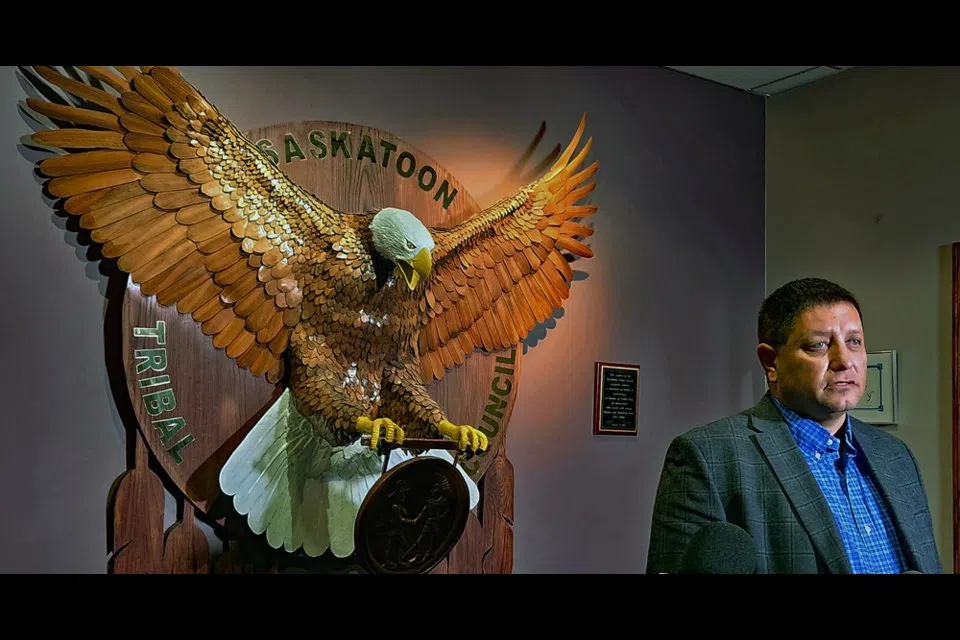
SASKATOON — As Canada prepares to mark the National Day for Truth and Reconciliation, Saskatoon Tribal Council Chief Mark Arcand is urging Canadians to confront the painful legacy of residential schools and commit to real change for survivors and their families.
Arcand, from the Muskeg Lake Cree Nation, has been one of the vocal proponents of educating people, especially non-Indigenous, on the treatment of Indigenous Peoples in Canada’s history, as the country observes the National Day for Truth and Reconciliation on Tuesday, Sept. 30.
He urged Canadians to recognize the residential schools’ painful legacy in the country’s history, adding that the stories and voices of all survivors must be heard and respected, admiring their courage to share their experiences despite inter-generational trauma.
“I want to make it very clear to everyone, this isn’t about politics, this is about people. I think about the courage of our survivors who spoke and told their truth. For those who were listening, thank you. For those who weren’t paying attention, please note. What happened to our people is not acceptable to any people. When I think about our prayers and hear our drum group playing songs that are healing for our people, I also feel a sense of healing within our community,” said Arcand.
Arcand, who is also a strong advocate for Indigenous Peoples within their organization and in other bands, said that even though First Nations in Saskatoon come from different communities in the province, they are all one community living in the city.
He said the harms of residential schools are deep and personal for him, with his uncle, Eugene Arcand, being a survivor and still struggling with the memories of being forced to attend the educational institution.
“Our home is our communities. Our home is where this system ripped apart our families. I don’t mean to disrespect the people, but if we’re going to change the system so that this never happens to anyone again, we have to speak the truth. We’ve got to speak honestly. How do we change the system? We invest in that truth. When we have survivors coming up to the podium, there are more who have stories of how it’s devastated their families. Our people never asked for this,” said Arcand.
He added that despite Indigenous children being taken away from their communities and forced to attend residential schools about eight decades ago, the trauma inflicted on the survivors still affects them, their children and their grandchildren, and no one was held accountable.
Arcand said Indigenous Peoples in the city are still looked down on, with many experiencing homelessness, and mental health and addiction issues because of a system that has continued destroying their lives. He added that one should not judge other people, especially those who need help, as we are all relatives under one Creator and should respect and treat each other equally, whether Indigenous or non-Indigenous.
He said that helping promote healing is one of the true meanings of reconciliation, and hearing Elders talk about their language, culture and identity, despite being taken away from them during the height of the residential schools.
“Guess what? It never conquered our people. It’s alive and well today. We are proud of our identity. We are proud of our ceremonies. We are proud of our language. We are proud to be First Nations people. This is our land. We have to acknowledge that. It takes all of us to move in the direction that treats everybody as equals. Come and understand who we are. Come and learn. This city will be a better place because we all have a responsibility to do what’s right for our people. We have to change the system together,” said Arcand.




Comments