

As Saskatchewan MLAs wrap up their final couple of days of peace and quiet before returning to battle in the new session of the Legislature, nuclear power is a top focus.
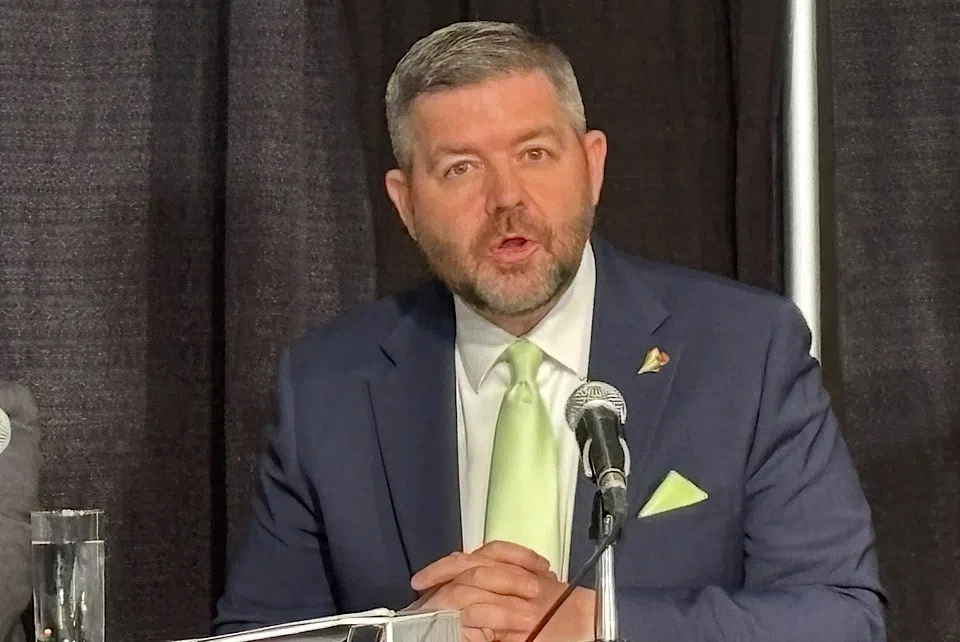
The Canadian Nuclear Association is hosting the first ever CNA West conference in Saskatoon from Oct. 20 to 22. A number of prominent members of the Sask Party government are due to attend at TCU Place, including a keynote address from Premier Scott Moe on Tuesday morning. Other speakers due to attend are Minister of Crown Investments Corporation Jeremy Harrison and Minister of Trade and Export Development Warren Kaeding.
Coinciding with the conference, the province has proclaimed Oct. 20 to 24 as the first ever Nuclear Science Week in the province, highlighting the province’s progress and strengths in advancing nuclear energy and research in the region.
Prior to the CNA West conference getting under way, Minister Harrison was at Cameco alongside their CEO Tim Gitzel and Sheldon Wuttunee, CEO of Sask. First Nations Natural Resource Centre of Excellence, where Harrison announced the Saskatchewan First Energy Security Strategy and Supply Plan.
It was touted in their news release as their pathway for a reliable and affordable power future placing Saskatchewan at the centre of the North American energy grid, according to the province.
The main takeaway is that the plan will commit the province to nuclear energy, with work continuing on small modular reactors and with the province stating it will consider large-scale reactors and advanced SMRs to meet the demand. The government also repeated what it already signalled back in June: that it would be extending the life of their coal-fired generation facilities.
“The Government of Saskatchewan is committed to a nuclear future utilizing our amazing Saskatchewan uranium resource to power our province and provide a secure energy future,” Harrison said in a statement. “We are going to get to that future by extending the life of our coal facilities and utilizing our Saskatchewan coal reserves that have kept the lights on in this province for generations. This plan is based in reality.”
Harrison also said the plan also places a strategic focus on transmission – both intra-provincial and external connections, that he said “will provide us the opportunity for export power and give us a great deal of flexibility in building new industries here in Saskatchewan.”
Meanwhile, NDP Economy and Jobs critic Aleana Young countered the government announcement by saying her party was releasing a “Grid and Growth Plan.”
In a statement, Young said they will lay out “an alternative to the Sask. Party’s so-called plan to spend nearly $1 billion on SaskPower’s coal plants — a plan that, to date, has no funding, no timeline and zero evidence that it can be undertaken effectively and with good value for taxpayers in mind.”
By contrast, according to the NDP, the Grid and Growth Plan would evaluate a mix of energy alternatives including renewables, nuclear, and natural gas generation. They also say they will explore and evaluate the business case for large-scale nuclear generation.
Addictions treatment another hot issue
Nuclear was not the only issue prominent on Monday. The NDP also made their call for the province to take action on the addictions issue.
In Saskatoon, their Mental Health and Addictions critic Betty Nippi-Albright called for action in five key areas: increased funding for harm reduction and in-patient treatment beds both on and off reserve, increases in-patient treatment detox services, expanding and funding sober living homes, a strategic workforce plan to recruit, train, and retain addiction and mental health professionals, and ensure involuntary treatment is reserved for the small minority of individuals whose addictions pose a serious threat to themselves or the public and only as a last resort.
“Voluntary treatment remains the most effective and appropriate path for the vast majority of people struggling with substance use,” said Nippi-Albright in a statement.
“For the small minority of people who are a real threat to themselves or others, involuntary options should be considered – but only as a last resort and only with appropriate safeguards in place.”
The issue of voluntary or involuntary addiction treatment is expected to be a major one during the upcoming session, as Premier Moe has hinted on a few occasions — including most recently in Moose Jaw — that a “conversation” would be coming this session about the “compassionate care” model and whether to bring it to Saskatchewan.
The first day back of the new session of the Legislature is this Wednesday with the Speech from the Throne. Premier Moe along with the new Lieutenant Governor Bernadette McIntyre are to participate in outdoor ceremonies marking the opening of the session that afternoon in front of the Legislative Building.
“It is an honour to stand alongside my colleagues and the Lieutenant Governor as we begin a new session,” Moe said in a statement. “This session our government will continue working to ensure Saskatchewan’s economy is strong, our communities are safe, and our future is secure.”




Comments