


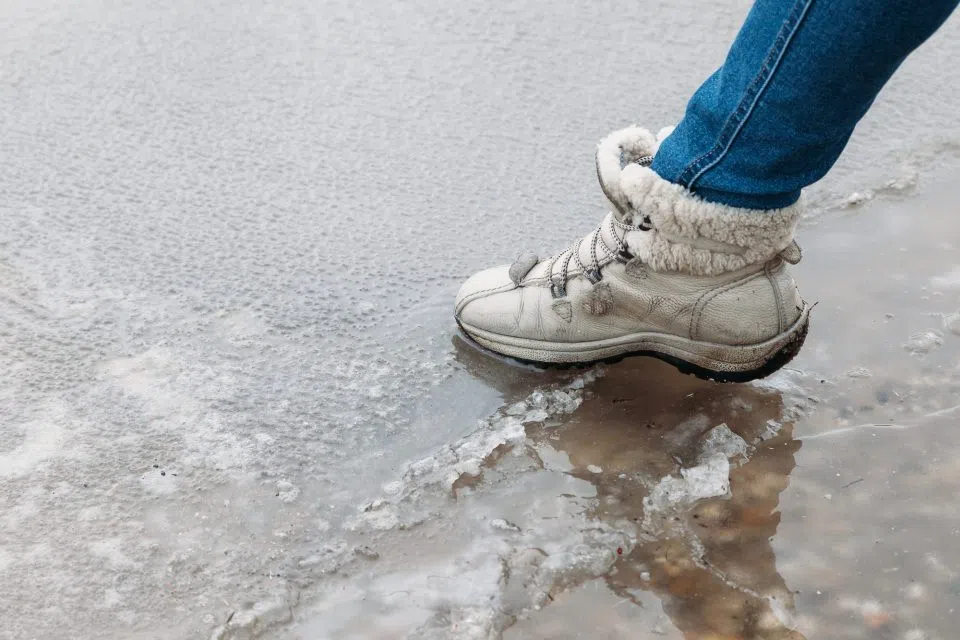
The Saskatchewan RCMP is reminding everyone to think twice before stepping onto frozen lakes, rivers, or ponds. With winter arriving slowly, ice conditions are unpredictable and dangerous.
Corporal Jamie Diemert, who coordinates the RCMP’s Underwater Recovery Team, says the freeze-up is far from complete:
“Right now, we’re seeing thin ice forming on the surface, but the water underneath is still warm. That means the ice is weak and can break under the weight of just one person. If you fall in, it’s extremely hard to get out while the ice keeps breaking around you. The risk of drowning is very high.”
Here are some key safety tips:
- Stay off the ice early in the season. It’s not stable yet, so avoid walking, playing, working, or driving on it.
- Watch out for white or snow ice. It’s the weakest type because it traps air and snow. This is what’s forming now, and it’s not safe.
- Wait for clear, strong ice. Clear blue ice is the strongest, but only when it’s thick enough. The Canadian Red Cross recommends:
- 15 cm (6 inches) for walking or skating in small groups
- 20 cm (8 inches) for larger groups
- 25 cm (10 inches) for snowmobiles or ATVs
- Wear a flotation device and carry ice picks if you absolutely must be on the ice.
- If you fall in: Don’t push down on the ice near you. Swim horizontally, kick your legs to get out, then crawl or roll away to spread your weight.
- If someone else falls in: Call 911 immediately. Help from the shore using a rope or pole—don’t rush onto the ice yourself.
- Remember: Cracks, fluctuating temperatures, moving water, and salt runoff from roads can all make ice weaker than it looks.
The RCMP Underwater Recovery Team assists in underwater investigations, including missing persons and evidence recovery.




Comments