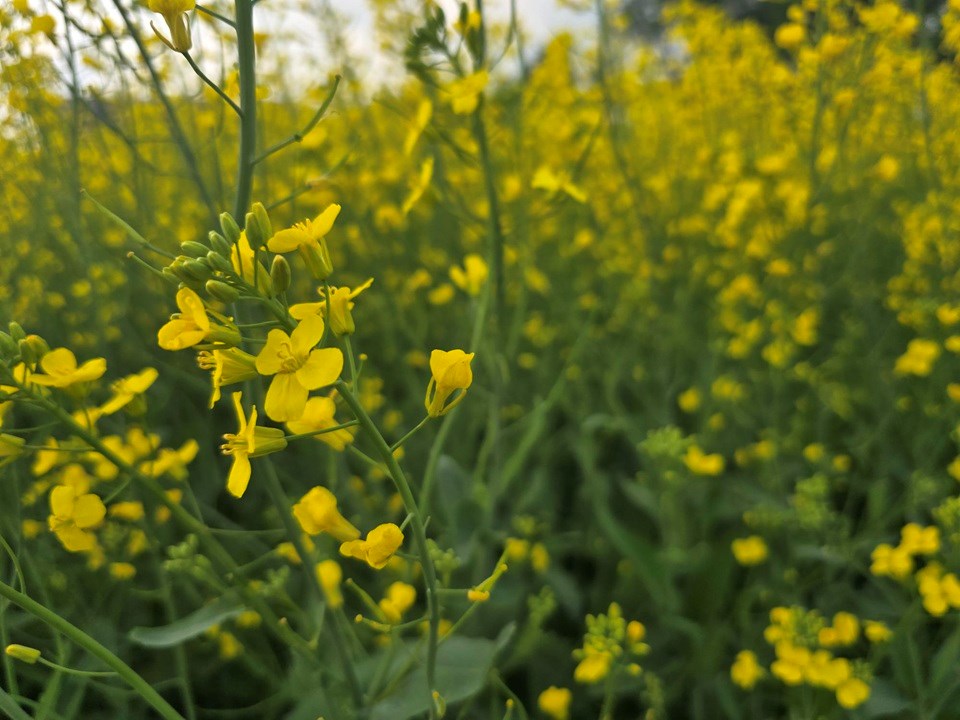
Canola is not the easiest crop to grow, whether it be the production costs for the grower or agronomic issues during the growing season.
A producer panel at Canola Week in Saskatoon last month, moderated by the Canola Council's Jay Whetter, examined several issues.
One topic was producer levies.
"With respect to the funding share and the implications that the farmers or front-end producers should be funding more, there is that middle bulk that is of the roughly $48 billion canola industry that is out there. $12 billion are farm gate sales, and that difference should maybe be contributing an awful lot more, and then the implications of a non-refundable levy. I really like the commissions that have the refundable there to maintain the accountability." said Patricia Lung, a producer-elected director with SaskOilseeds from Lake Lenore.
Producer levies are combined with government money to fund a wide variety of research projects. Anthony Eliason is a SaskOilseeds Director from Outlook. He described the process in selecting which projects receive funding and what he would like to see more of.
"We understand that when we're funding these projects, that this sounds great; hopefully, I'll see it in my lifetime on my farm, so I'm going to fund it. Then we'll all turn around. Saskatchewan has ADF and ADOPT programs where we're going to see stuff one-year, two-year turnarounds, and we'll also fund those because those are great. We'll see them; they're wins to the farmers, but we're really missing that three to five-year turnaround projects. We're really not seeing them come across our desk to even fund, so we're missing that."
Eliason provides an example of research he would like to see.
"I have asked some chemical companies for higher levels of resistance to Liberty, like getting to that two-litre rate. They told me they're not doing it; that goes to the discussions on weed controls. A lot of times I don't have the time to spray two passes, so I only have the time to spray one pass. I do it right, but I only have time to do one pass, and sometimes it's not enough."
Jason Kehler farms between Elm Creek and Carman, Manitoba. He would like to see more research on canola roots.
"I think we need to get faster root development, and that's going to get around a lot of these issues. If you can get a deeper root faster, you can get around the later drought and heat stress because it's in the ground deeper; it's getting more ground moisture. Cold tolerance at least has a chance; it's never going to have great frost tolerance because the growing points above ground, but at least it has a chance to do something when it's in there. If we can seed it down that extra half inch or more into the ground to give us that extra chance, it'll have a chance to survive later on. If we're sitting at a quarter inch, half inch, and then it's just still struggling to get out of the ground, you're never going to win."
Kayler says farmers also have a role in ensuring a canola crops success.
"I agree breeding and research and all these things are important, but if you want something that actually annoys me, it's farmers being irresponsible. Seeding canola, we all know we need canola to be out and running inside of two weeks to have our flea beetle protection. Well, don't seed it the 15th of April into cold, wet ground. We don't seed canola until after the long weekend in May; we want a certain ground temperature, just as an example. When you're spraying canola, use high pressure, use high droplet size, slow down, and be careful; do a job when you're doing it. So many farmers go racing around, and I see these rogators going up and down the field at 27 miles an hour with a cloud of dust that looks like a combine. 'Oh well, I don't have efficacy', well really?"
(With files from Neil Billinger, CJWW)