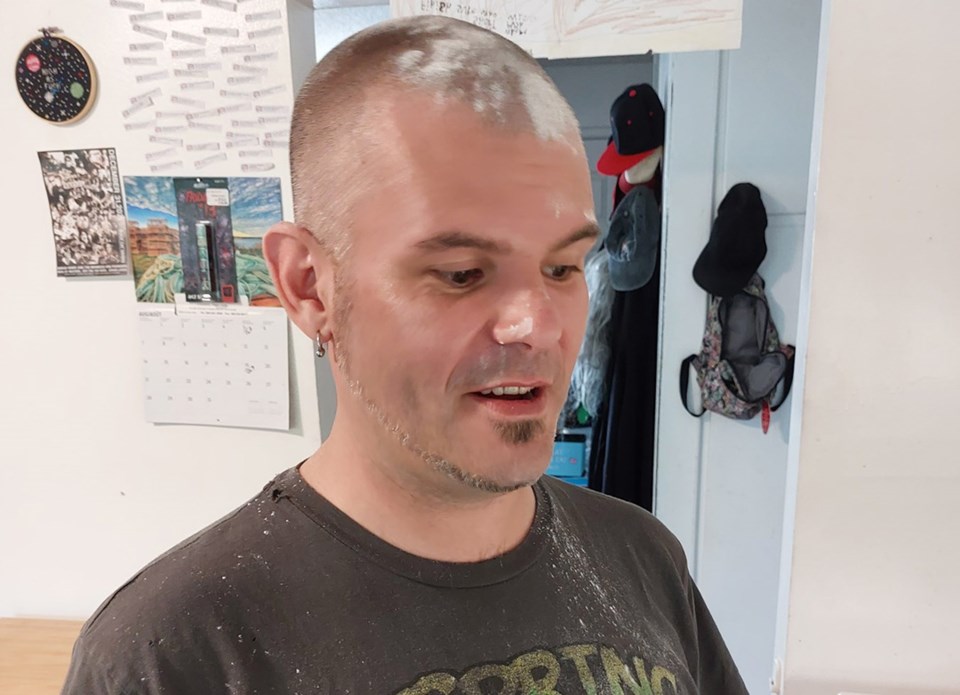
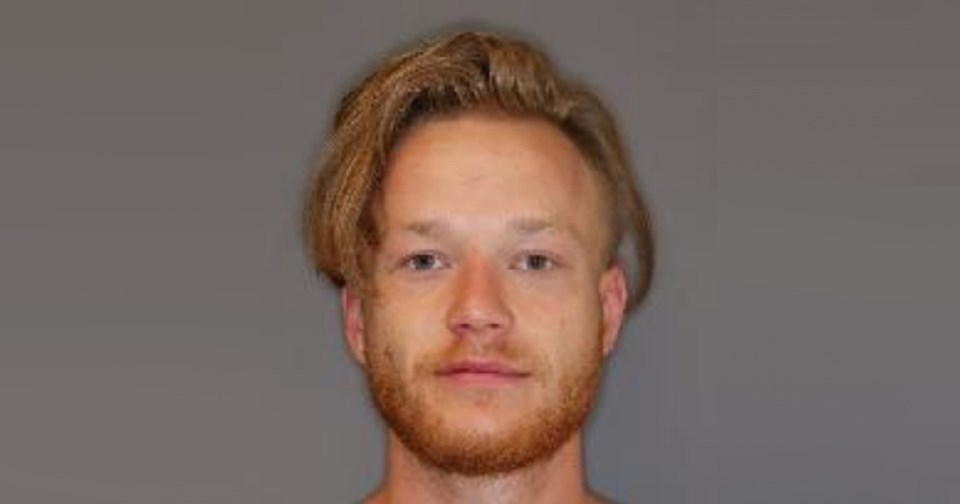
SASKATOON — A Saskatoon judge has sentenced Ashtin Ritzand and Colton Lischka to 10 years in prison each for the 2022 killing of James “Ed” Swift and the near-fatal stabbing of Virginia Belheumer.
The decision by Justice Michael D. Tochor on Jan. 30 in Court of King’s Bench follows the pair’s convictions last fall on manslaughter and aggravated assault charges. Both men were originally charged with second-degree murder and attempted murder, but the judge found the evidence didn’t establish beyond a reasonable doubt which of them delivered the fatal stab wounds. They were each convicted as party to the offences.
“Either Mr. Ritzand or Mr. Lischka murdered Mr. Swift,” said Justice Tochor. “On the evidence, I am not able to determine beyond a reasonable doubt which of them murdered Mr. Swift, but one of them did. Therefore, this scenario went beyond near murder, it was murder.”
Justice Tochor reached a similar conclusion about Belheumer. He said one man stabbed her and the other was at least a knowing participant.
Swift died from a stab wound to the front of his neck. Belheumer survived four stab wounds on her neck under her left ear.
Parking-lot encounter turns deadly
The case stems from a chance encounter on Aug. 29, 2022, in a Saskatoon liquor store parking lot.
Court heard that Swift and his friend, Belheumer, were approached by a vehicle driven by Anthony Burley, with Ritzand and Lischka as passengers. Burley’s vehicle struck Swift, who had a broken leg, sparking a confrontation.
In an attempt to smooth things over and keep Belheumer from reporting the parking lot incident to police, Burley invited the two strangers back to his home in Saskatoon. There the group decided to buy cocaine. Ritzand drove Burley’s car, with Lischka in the passenger seat and Burley, Swift and Belheumer in the back, to make the purchase.
On the drive back, violence erupted when Burley grabbed the bag of cocaine, which Swift had mostly paid for, and refused to hand it over. An argument turned physical inside the car. Belheumer testified that Lischka turned around, held up a knife and threatened to “shut up” Swift if he didn’t calm down.
Ritzand then drove the group to a secluded grid road near the intersection of Penner Road and Rural Road 3050, in the R.M. of Corman Park.
Court heard that both Ritzand and Lischka were outside the vehicle with Swift when he was fatally stabbed. One of the two men then pulled Belheumer from the car, told her “you’re next,” and stabbed her.
A passing motorist later found Belheumer, who survived her injuries.
Burley’s murder charge was withdrawn in July 2023 and he pleaded guilty to accessory after the fact. He was sentenced to three years in prison.
Judge finds both men at highest level of moral culpability
Justice Tochor placed both Ritzand and Lischka in the highest category of moral culpability, saying that stabbing a person in the neck will almost invariably involve the risk of life-threatening injuries and is often used by courts to infer an intent to kill.
He rejected defence attempts to characterize the violence as spontaneous or accidental.
The judge also found that the second stabbing, of Belheumer, carried its own heightened moral culpability.
Whoever acted as the “party” to Swift’s killing had just witnessed a stabbing and couldn’t claim ignorance about the risk to Belheumer. Her testimony that one of the men told her “you’re next” reinforced that conclusion, he said.
Aggravating factors
The court identified aggravating factors that significantly increased the seriousness of the offences. Justice Tochor said that the violence inflicted on both Swift and Belheumer involved targeted, life-threatening injuries to vital areas of the body.
He said the attacks were carried out by two offenders against victims who didn’t pose a threat.
After the stabbings, Swift and Belheumer were left in the ditch without access to a phone or any realistic prospect of help, which the judge said added to the gravity of the crimes. The profound and lasting impact on the victims’ families was also an aggravating factor.
He said the stabbings were disproportionate to the conflict over the possession of the drugs and he took Ritzand’s violent criminal record into consideration.
Mitigating factors
There were mitigating factors, however, for both men, said Justice Tochor.
Ritzand had a traumatic upbringing, turned himself in the next day, and completed extensive programming in custody. Lischka, a first-time offender, had strong community support, a stable work history, and expressed remorse.
Justice Tochor said these factors persuaded him to reduce what could have been a 12-year sentence.
The sentence
Crown prosecutor Paul Scott initially sought a global sentence of 10 to 15 years for both Ritzand and Lischka. He later narrowed that request to 10 to 12 years each.
Ritzand's lawyer, Blaine Beaven, argued for a global sentence of seven years. He said Ritzand's 1,250 days in custody amounts to about five years of remand credit and should satisfy the manslaughter sentence as time served. For the aggravated assault, he said a conditional sentence of two years less a day, followed by two years of probation. Served consecutively, he said this was his proposed seven-year global sentence.
Lischka's lawyer Nicholas Stooshinoff asked the court for a four-year global sentence. He asked for the lowest manslaughter range of four years, and a two-year sentence for aggravated assault, but to be served concurrently.
For both Ritzand and Lischka, Justice Tochor imposed eight years for manslaughter and two years consecutive for aggravated assault. He rejected defence arguments for concurrent time.
He said a 10-year sentence balanced the seriousness of the crimes, the high moral blameworthiness, and the mitigating personal circumstances.
“The gravity of these offences is very high,” he said.
After applying remand credit, Ritzand has 1,807 days left to serve and Lischka has 3,551 days remaining.
Both men were given mandatory lifetime bans on firearms and ordered to provide their DNA.