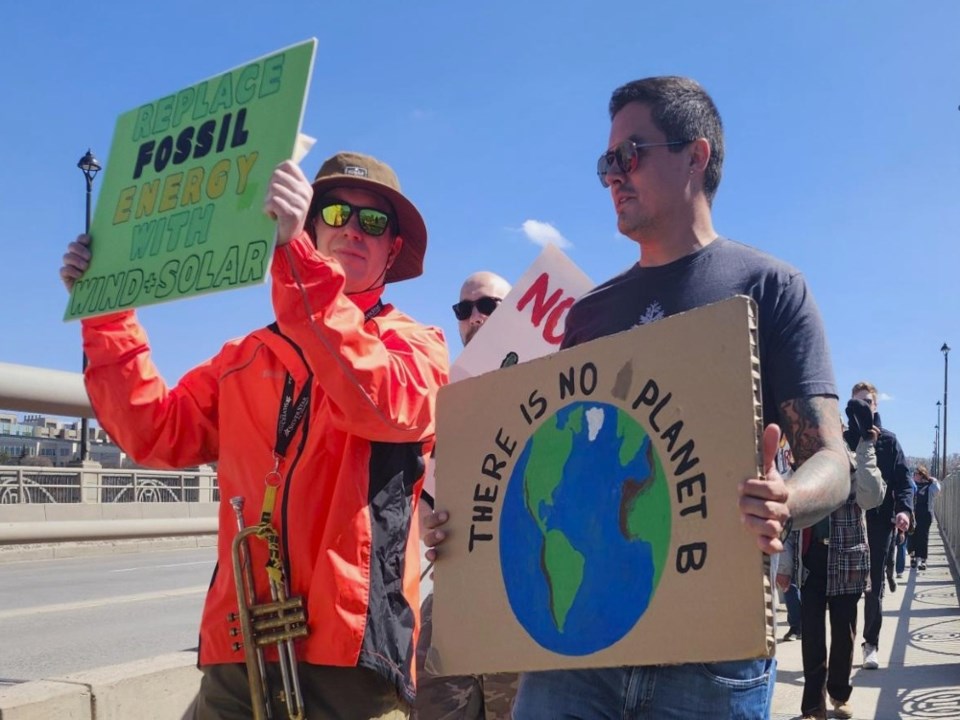
SASKATOON — Lawyer and environmental advocate Glenn Wright has again called for Canada’s leaders to focus decisively on investing in clean energy sources, backing an e-petition launched by Saskatchewan geoscientist Brian Brunskill. The petition aims for renewable investments to match public funding for hydrocarbon development dollar-for-dollar.
Wright, an associate at Procidio LLLP, said Brunskill’s petition is a practical step toward shaping Canada’s energy policy as Prime Minister Mark Carney’s government looks to promote the country as an emerging energy superpower. Green Party Leader and Saanich–Gulf Islands MP Elizabeth May will present the petition in Parliament in late spring.
He said the initiative, e-7714 (Natural Resources and Energy), aligns with a broader framework he believes is essential to avoid what he describes as civilizational collapse, pointing to reducing environmental impacts, replacing fossil fuels with clean energy, and reconciling humanity’s relationships with nature and one another as three priority areas.
Wright said reducing environmental impacts involves systemic efficiency by curbing waste, becoming more efficient, replacing outdated infrastructure, and stopping endless growth and the pursuit of a consumption-focused economy.
The second priority Wright hopes to see is the end of new fossil fuel infrastructure and the elimination of fossil fuel subsidies. He added that the petition’s core demand is matching federal financial support for hydrocarbon infrastructure with equivalent investments in renewable energy, which fits squarely within that objective.
“If public dollars are going to support energy development, they should accelerate the transition, not entrench carbon-intensive systems,” Wright said.
Canada has committed to achieving net-zero greenhouse gas emissions by 2050, yet federal and provincial governments continue to provide various forms of financial support to the oil and gas sector. Advocates of the petition argue that aligning fiscal policy with climate commitments is necessary to maintain credibility and meet emissions targets.
Wright said reconciliation should also be a priority, noting it is broader and more complex than often understood. He said it extends beyond Indigenous–settler relations to include human rights, anti-racism initiatives, gender equity, and recognition of the rights of nature.
“We haven’t even reconciled with Indigenous peoples after more than 300 years since first contact in Canada. Reconciliation in a broader sense, with each other and with the natural world, is even more difficult,” said Wright, adding that energy policy reform is a starting point.
He said tying renewable energy funding directly to fossil fuel subsidies offers a clear fiscal mechanism to accelerate the transition without requiring entirely new spending frameworks. Wright encouraged Canadians to sign the petition ahead of its presentation in Parliament, framing it as a constructive intervention in the country’s energy trajectory.
“The question isn’t whether we need energy. It’s whether we’re going to invest in systems that stabilize the climate and sustain communities, or ones that deepen the crisis,” he said.
The petition comes as national debates intensify over pipelines, critical minerals, electricity and industrial decarbonization. Supporters argue federal policy must move beyond rhetoric and structurally prioritize renewable energy development if Canada is to meet both its climate obligations and economic ambitions.