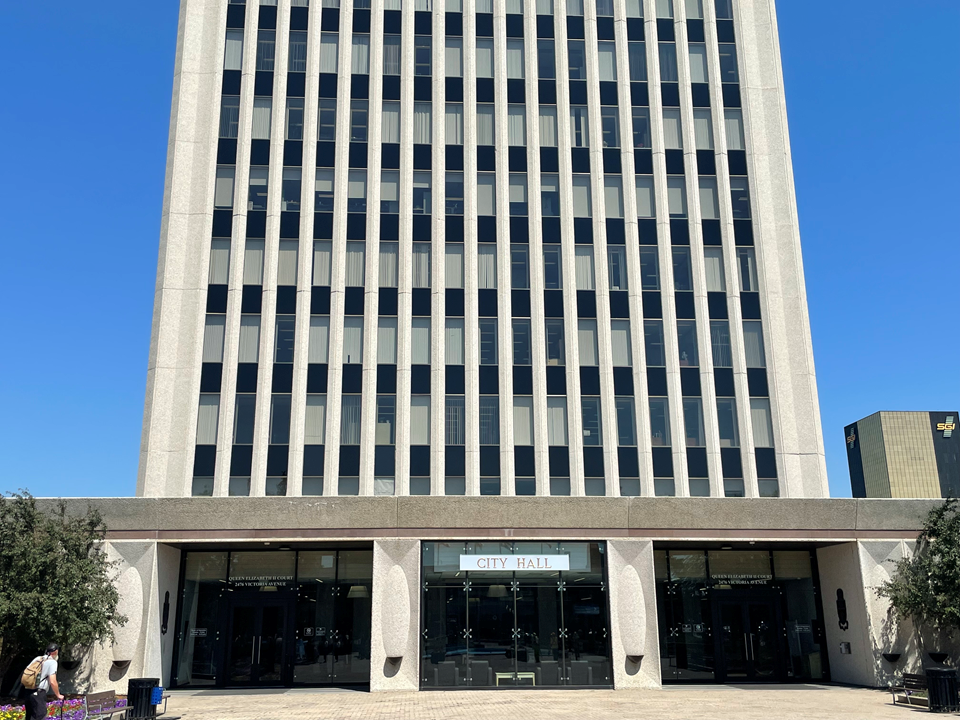
REGINA — Regina’s city council will consider several key items during Wednesday’s meeting.
These include:
Transit fare final decision
Council will determine whether to approve the third reading of the amended transit fare bylaw, which would formally implement a 10 per cent fare increase.
On March 11, council was unable to reach unanimous consent, which pushed the decision to Wednesday’s meeting. If the bylaw passing receives a majority vote, the transit fare increase would go into effect roughly a month later.
The proposed 10 per cent increase would see fares for a single adult/youth/senior fare cost $3.50 (previously $3.25), while a month pass would be $97, up from $88.
However, if council votes down the bylaw, the city would be forced to find savings of $585,000 from the general reserve fund for 2026 before any consideration for transit fare increases in 2027.
Central Library project funding
The Central Library Renewal Project (CLRP) is facing funding uncertainty to construct the proposed new downtown central branch.
In 2024, the city had committed between $92 million and $119 million in debt financing for the CLRP, but other projects could leapfrog the library for money if required.
Regina published a report at the March 11 city council meeting outlining debt room isn’t available for the CLRP for at least the next five years, as available room has been allocated for the Wastewater Treatment Plant upgrade.
The issue resulted in council directing administration to outline where debt is allocated, which projects could require debt and potential solutions for the CLRP.
A new report outlines a best-case scenario in which approximately $113 million in CLRP debt could be available by 2030.
Animal bylaw
Council will consider passing the amended animal bylaw.
On March 18, the city outlined proposed changes, including:
- Dogs must be leashed on public property except for off-leash parks where verbal control is permitted. (The current version allows owners to have either physical or verbal control of their animal in public.)
- Animal owners must show identification upon request of a designated officer if there is a process for issuing a ticket. (The current version does not require identification);
- The city can apply to the court for an interim order, offering a streamlined process to ensure the owner complies with restrictions pending the dangerous animal hearing. (Currently, a city representative conducts a dangerous animal hearing to have an animal designated as a dangerous animal. If new bylaw is passed, a Justice of the Peace may issue various orders to ensure the owner manages their pet appropriately);
Advocates welcomed the update but said more proactive measures — and faster consequences for owners who don’t comply with court orders — are needed.
Administration previously said they will come back on a yearly basis to report on progress and recommendations moving forward.
Improvements to construction
Mayor Chad Bachynski wants to explore ways to improve construction across the city.
Bachynski is proposing administration look into 24-hour operations, procurement processes and opportunities for innovation and efficient communication for resident and business engagement.
Any changes could also result in updates to the city’s bylaw.
If approved, administration would report back by the first quarter of 2027.