REGINA — The City of Regina is making progress in reducing waste directed to its landfill.
During Wednesday’s executive committee meeting, the city said its landfill is now scheduled to close three years after 2050, according its latest Waste Plan Regina (WRP) update.
“Right now we’re expecting the landfill life to go to about 2053, and that’s assuming that we increase our waste diversion up to that 65 per cent,” said Kurtis Doney, deputy city manager of city operations.
The city has a current waste diversion target of 65 per cent, adopted in the passing of the Waste Plan Regina (WRP) street-level service in 2011.
Regina had only been seeing diversion rates at 20 per cent until 2023, when it introduced the food and yard waste service.
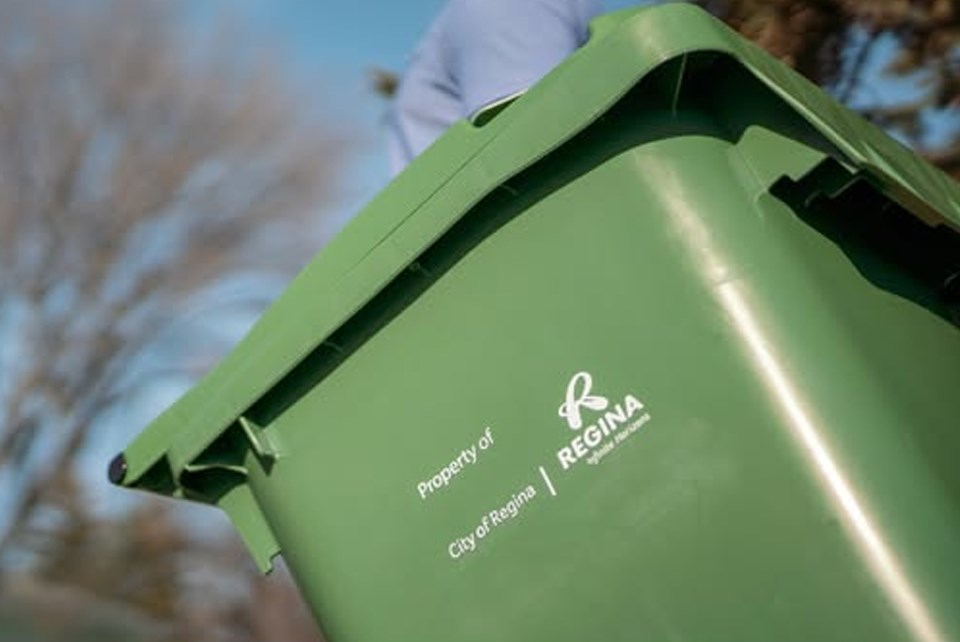
As part of it, “nearly 68,000 green carts were delivered to residents, and garbage service transitioned to a bi-weekly schedule year-round. Additionally, the city introduced a user-pay for garbage system to encourage waste diversion and reduction and fund the food and yard waste service,” according to the city’s website.
This new system has helped waste diversion rates increase to 40 per cent, still below the city’s target.
Mayor Chad Bachynski said he believes reaching the mark is possible in the coming years.
“It’s going to be a combination of help from our residents to achieve those goals, as well as ongoing collaboration with the city to look at creative ways to implement and adapt our programs.”
Need for more progress
The city has seen 17,500 households reduce their waste fees by downsizing their garbage cart.
However, the city is seeing 31 per cent of materials in their brown bins (garbage) are food and yard waste items.
“When items are placed in the wrong cart, it causes contamination. This can lower the quality of recyclables and compost and make processing more expensive,” notes the city report.
The city has also experienced high levels of contamination in their recycling bins after changes have been made to items allowed in the bins.
In 2025, Regina transitioned to contracting SK recycles to pick up and dispose of materials.
As of March, 18 per cent of items thrown into blue bins weren’t recyclable materials.
Carolyn Kalim, City of Regina director of waste, water and environment, said during a press conference that contaminated materials can cause issues at the recycling facility.
“If a type of contaminant that’s going to spread throughout the load, it may contaminate the entire load and turn it into material that ends up having to be landfilled in a worst-case scenario,” said Kalim.
Future regulatory changes
Starting in July 2027, multi-family properties will be required to offer food and yard waste collection alongside their existing garbage and recycling services.
Through a proposed update to its Early Adopter Incentive Program (EAIP), first introduced in 2023 to provide financial support to businesses, institutions and organizations, for waste collection, the city could offer two different financial aid options for multi-family property owners, now incorporating food and yard waste collection:
- A multi-family operational support and capital package: $55/month/green cart operational rebate from start of services to required implementation date, and up to $25/unit one-time capital offset for in-unit collection.
- Capital support limited to the eligible capital expenses identified below: Reimbursement of 100 per cent of eligible capital investment up to $10,000 and 50 per cent of eligible capital costs for anything over and above $10,000 to a maximum payment of $20,000.
Condo owners have been working with the city for years on a solution to mitigate paying for food and waste collection through contracted services.
“This is huge for us and a big milestone for council,” said Jeff Campbell of the Canadian Condominium Institute-South Saskatchewan Chapter during his delegation on Wednesday.
Campbell noted that several condo owners have already paid between $60,000 and $90,000 since the city ended collective waste services for condominiums on Jan. 1, 2023.
The city is also requiring a multi-stream waste system that includes garbage, recycling and organics for industrial, commercial, and institutional properties by Jan. 1, 2028.
A new waste plan
City administration has proposed a solid waste management plan for council approval in 2028 or 2029.
Doney noted a lot has changed since their current WRP was adopted in 2011.
“Landfills are one of the largest sources of methane gas within the city. And so in 2028, we’ll look to do some monitoring and then likely in about 2035, actually regulating the amount of methane that comes from landfills.”
Federal regulations aim to reduce landfill methane emissions by 50 per cent in the next nine years.
“We need to adapt and change with that and continue to ensure our food and yard waste stays out of the landfill.”
The proposed plan would also incorporate a long-term framework to guide waste policies, programs and services for the next 25 years.