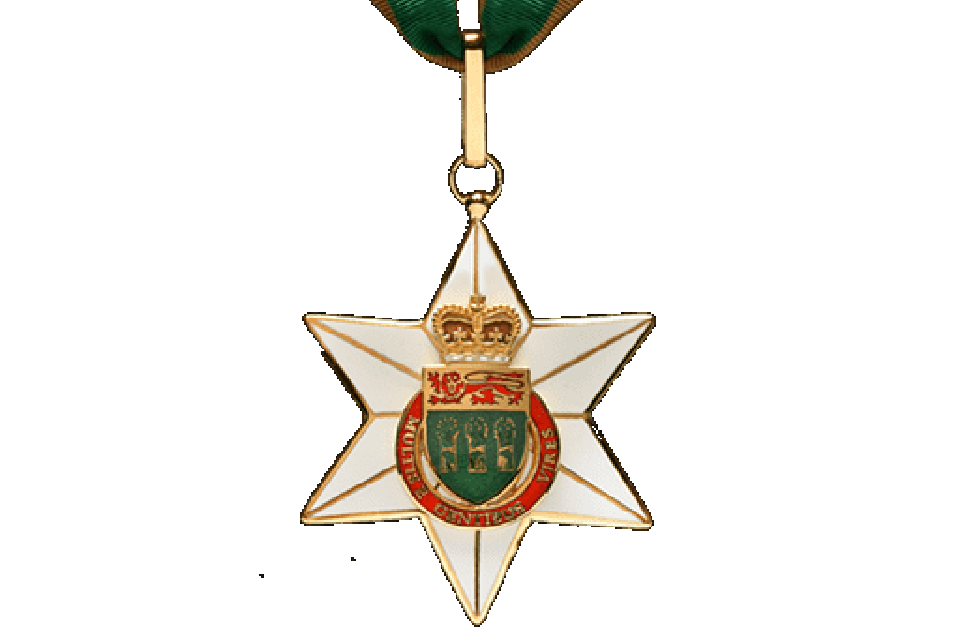
REGINA — Bernadette McIntyre announced nine individuals who will become the next recipients of the Saskatchewan Order of Merit, the province's highest honour.
The recipients will be invested with the medal of the Order at a ceremony in Regina in June.
“I am amazed by the strides that the 2026 Saskatchewan Order of Merit recipients have made; earning national and international acclaim in diverse fields, including music, engineering, law, health care, education and heritage,” McIntyre said. “The depth and breadth of their accomplishments is astonishing. I am grateful for their countless contributions to Saskatchewan, both as professionals and volunteers.”
The 2026 Saskatchewan Order of Merit recipients are:
- Raymond B. Blake
- Anne Doig
- Chris Ekong
- Ronald J. Kruzeniski
- Melissa Morgan
- Harold Orr
- Donny Parenteau
- Lionel Peyachew
- Phoebe Voigts
The Saskatchewan Order of Merit was established in 1985 to celebrate excellence and achievements by Saskatchewan citizens. To date, 291 individuals have been invested with the Order in recognition of their significant contributions in areas such as agriculture, business, industry, community leadership, public service, art, research and volunteering.
The Order is presented by the Lieutenant Governor, who serves as the chancellor. In 1991, the Government of Canada granted recognition to the Saskatchewan Order of Merit and a place in the Canadian Honours System's national sequence of orders, decorations and medals, immediately after national orders and before national decorations. Members of the Order are entitled to use the post-nominal letters S.O.M. for life.
Dr. Raymond B. Blake
Dr. Raymond B. Blake, F.R.S.C., is one of Saskatchewan’s most distinguished historians. A professor at the University of Regina for more than 25 years, he has made enduring contributions to scholarship, teaching, institutional leadership, and public life in Saskatchewan and across Canada.
Born in Newfoundland and Labrador, Dr. Blake earned his PhD in Canadian history in 1991 and has built an academic career of national and international distinction. He is the author, editor, or co-editor of 23 books and has published extensively on Canadian political history, social policy, nationalism, commemoration, and federal–provincial relations. His recent book, “Canada’s Prime Ministers and the Shaping of a National Identity” (2024), received the Shaughnessy Cohen Prize for Political Writing. His major works on Newfoundland and Labrador have also earned numerous national honours, including the Clio Prize and the Pierre Savard Award. In recognition of his scholarly excellence, he was elected a Fellow of the Royal Society of Canada in 2018.
At the University of Regina, Dr. Blake has served with distinction as Professor, Department Head, Associate Dean, and Director of the Saskatchewan Institute of Public Policy, helping to lay the foundation for what is now the Johnson Shoyama Graduate School of Public Policy. He has mentored generations of students and supervised graduate and post-doctoral researchers.
Beyond the academy, Dr. Blake is a respected commentator on Canadian history and public policy, serving governments, institutions, and the public with insight and clarity.
Dr. Anne Doig
Dr. Anne Doig is a nationally respected physician, educator, and health system leader whose contributions have shaped health care, medical education, and public service in Saskatchewan and across Canada.
Based in Saskatoon, Dr. Doig has served as a family physician in Saskatchewan for more than four decades, providing compassionate, patient-centred care with a strong focus on rural and community health equity.
She is best known for her tenure as President of the Canadian Medical Association (2009–2010), where she provided principled, values-based leadership during a pivotal period in Canadian health care. Her advocacy emphasized team-based primary care, consistently placing the well-being of patients, families, and communities ahead of institutional or professional interests. Her leadership continues to influence national conversations on health system reform.
A proud alumna of the University of Saskatchewan’s College of Medicine (MD, 1976), Dr. Doig remained deeply engaged with the university as a Clinical Associate Professor in Obstetrics, Gynecology, and Reproductive Sciences and as a member of the University Senate from 2018 to 2024. Her teaching excellence has been recognized with multiple awards, and in 2013 she received an Honorary Doctor of Laws.
Dr. Doig has demonstrated exceptional community leadership through service with STARS, the Saskatoon Symphony Society, Swim Sask, and Swimming Canada. Nationally honoured as one of Canada’s Top 100 Most Powerful Women (2010), she exemplifies leadership marked by integrity, compassion, and enduring public impact.
Dr. Chris Ekong
It is with profound gratitude for a life well lived that Dr. Chris Ekong is remembered, a distinguished neurosurgeon who served Southern Saskatchewan for four decades. Born in Uyo, Nigeria, Dr. Ekong earned his medical degree at the University of Ibadan in 1972, completed neurosurgical training in Saskatoon and Toronto, and a neurotrauma fellowship at Sunnybrook Hospital, before settling in Regina in 1982.
A Fellow of the Royal College of Surgeons of Canada, the American and International Colleges of Surgeons, and a Canadian Certified Physician Executive, Dr. Ekong combined clinical excellence with compassionate, patient-centred care. His leadership in spine and neurotrauma surgery expanded expertise in Saskatchewan and improved outcomes province-wide. An accomplished scholar, he authored more than 100 publications, held academic appointments including Clinical Professor of Neurosurgery at the University of Saskatchewan, and mentored generations of students, residents, and fellows.
Dr. Ekong was also a visionary advocate for injury prevention and global health education, pioneering safety initiatives and founding neurosurgery rounds that connected specialists worldwide. Through partnerships with the Hospitals of Regina Foundation, he established international outreach initiatives and the Dr. Chris Ekong Neuro Spine Fellowship to train future specialists.
A beloved man of faith, he entered his heavenly home on February 18, 2026. He is lovingly remembered by his wife, Dr. Jane Ekong; children, Imo, Nse, Ime, and Enobong (Ian); and grandchildren, Amos and Ava.
Ronald J. Kruzeniski, S.V.M., K.C.
Ronald J. Kruzeniski, S.V.M., K.C., is a distinguished Saskatchewan lawyer, public servant, and volunteer leader whose life’s work has advanced human rights, accessibility, and the protection of society’s most vulnerable people. Born in Balcarres and raised on a family farm near Ituna, he experienced progressive vision loss from childhood, a challenge that shaped his lifelong commitment to equity and public service.
Ron earned a Bachelor of Administration from the University of Regina and a law degree from the University of Saskatchewan, graduating in 1972 after overcoming significant barriers to complete his studies. Following private practice, he became Chief Commissioner of the Saskatchewan Human Rights Commission, where he championed higher educational standards for Indigenous peoples and helped establish groundbreaking accessibility standards for public buildings.
He later served Saskatchewan with distinction as Public Guardian and Trustee for 19 years, safeguarding the financial and personal interests of vulnerable children and adults, and as Information and Privacy Commissioner, balancing government transparency with the protection of individual privacy.
Parallel to his professional career, Ron devoted five decades to volunteer leadership. He held leadership roles with the Canadian National Institute for the Blind, helping raise more than $25 million for guide dog services and advancing accessibility programs. He also served with the Alzheimer Society, Regina Public Library, school board, and community organizations.
Widely respected for humility and mentorship, Ron Kruzeniski’s legacy is an inclusive and just Saskatchewan.
Dr. Melissa Morgan
Dr. Melissa Morgan is a distinguished Saskatchewan-based conductor, educator, and community leader whose work has profoundly shaped the province’s choral, cultural, and educational landscape. A respected scholar and artist, she serves as an Associate Professor of Music at the University of Regina, where she has inspired generations of students through her excellence in teaching, performance, and mentorship.
Dr. Morgan’s leadership extends well beyond the classroom. She has championed inclusive and socially meaningful choral programming, highlighting works by Black, Indigenous, female, and LGBTQ2S+ composers, and fostering intercultural dialogue through music. Under her direction, University of Regina ensembles have performed on international stages, including at Cadogan Hall in London, England, and at Toronto’s David Geffen Hall at Lincoln Center, bringing Saskatchewan talent to global audiences.
During the COVID-19 pandemic, Dr. Morgan demonstrated visionary leadership by creating innovative virtual choir projects and online workshops that sustained musical connection and community when it was most needed. She has also made lasting contributions through guest conducting, adjudication, clinics, conferences, recordings, and scholarly publications, strengthening choral practice across Saskatchewan, Canada, and internationally.
Dr. Morgan’s impact has been recognized through numerous honours, including the Lieutenant Governor’s Celebration of the Arts Pin, CBC Saskatchewan’s Future 40 Under 40, the Queen Elizabeth II Platinum Jubilee Medal, and the YWCA Women of Distinction Community Champion Award.
Harold Walter Orr
Harold Walter Orr is an engineer whose work established Saskatchewan as a global leader in energy-efficient housing and building science. Born in Minton, Saskatchewan, in 1931, Orr trained as a carpenter before earning a B.Sc. (1959) and a M.Sc. (1962) from the University of Saskatchewan. His research on air infiltration measurement laid the groundwork for technologies that would later transform residential construction worldwide.
Over more than two decades with the NRC-DBR, Orr led innovations in airtightness measurement (blower-door), heat-recovery ventilation, super-insulation, and whole-house energy modelling (HotCan/Hot2000). He was a principal engineer on the Saskatchewan Conservation House (1977), which demonstrated reductions in heating energy of up to 90 percent and became the foundation for Canada’s R-2000 program, the EnerGuide Rating System, and modern performance-based building codes, including provincial Step Codes.
Beyond new construction, Orr proved that existing homes could achieve near-new performance through deep-energy retrofits, including the “chainsaw-retrofit.” Following retirement, he taught engineering and continues to mentor well into his 90s.
Orr’s contributions have reduced energy costs, improved housing durability and indoor air quality, shaped national and international standards, and earned international awards and recognition in Europe and North America. Beyond engineering, he has contributed to Christian education as a professor, board member, and president, and has served his local church as a teacher, song leader, elder, and builder. With his wife, Mary, he raised a large family, including adopted and foster children, nieces, and nephews. A Member of the Order of Canada, his legacy reflects innovation, public benefit, and lifelong service to Saskatchewan.
Donny Parenteau
Donny Parenteau, a celebrated Métis musician, educator, and community leader from Prince Albert, Saskatchewan, has contributed to the cultural and social fabric of the province for over three decades. As a gifted multi-instrumentalist and performer, Donny earned national and international recognition, receiving well over 100 nominations across eight major award programs in Canada and the United States. A three-time Juno nominee, he has also received the SCMA Legends and Legacy Award in 2020 and induction into the Prince Albert Arts Hall of Fame in 2023.
Donny’s professional career includes 12 years touring internationally with American country artist Neal McCoy, after which he chose to return home to Saskatchewan to build a solo career grounded in his community and Métis roots. Donny has performed on world-class stages, including Europe, the United States, Parliament Hill, Rideau Hall, the Vancouver Winter Olympics, and the first half-time show at the new Mosaic Stadium in 2017. Donny teaches and mentors emerging artists through his school of music. In 2022, Donny created and formed the Saskatchewan Indigenous Music Association and Awards to create awareness and recognition for Indigenous music in Saskatchewan.
Equally significant is his community leadership through initiatives such as Bully Free Zone and Colours of the Sash. Donny has reached thousands with messages of kindness, resilience, and Métis cultural pride. From being a longtime volunteer to co-hosting Telemiracle to entertaining elders at senior homes in Saskatchewan, Donny exemplifies generosity, humility, and service. Donny’s life’s work reflects a deep commitment to culture, education, and community.
Lionel Auburn Peyachew
Lionel Auburn Peyachew is an Indigenous artist from Red Pheasant Cree Nation whose creative practice has shaped Saskatchewan’s cultural landscape for nearly three decades. Best known for his public sculptural works, he is an accomplished painter, artist, educator, mentor, and volunteer. His installations are found across Saskatchewan and Alberta.
Over the past decade, Peyachew’s work has focused on themes of reconciliation, Missing and Murdered Indigenous Women and Girls, Residential Schools, and the ongoing impacts of colonialism. His art creates space for dialogue, remembrance, and healing while fostering shared understanding. A significant example is Annie Peyachew (2024), unveiled in North Battleford and inspired by a relative who attended the Battlefords Industrial School. The sculpture responds to the Truth and Reconciliation Commission’s Calls to Action and has become a cherished community monument.
Since 2005, Peyachew has served as Associate Professor of Indigenous Fine Arts at the First Nations University of Canada, where he has also held leadership roles. Through teaching, mentorship, exhibitions, and community-based projects, he has inspired emerging Indigenous artists.
Peyachew’s extensive service to the arts includes his past role as Director of the Saskatchewan Arts Board and ongoing involvement with Sâkêwêwak Artists’ Collective Inc. His career reflects artistic excellence, cultural preservation, and community leadership.
Phoebe Voigts
Phoebe Voigts is one of Saskatchewan’s most influential leaders in music education and choral artistry. In 1996, she founded the Saskatoon Children’s Choir (SCC) with a bold vision: to create a world-class children’s choir rooted in artistic excellence, humanitarian values, and global understanding. Over the next three decades, she realized that vision with extraordinary impact.
Under Voigts’ inspired leadership, SCC developed an international reputation for musical excellence and socially engaged programming. The choir has performed across Europe, Asia, Africa, the United States, and Canada, earning prestigious honours, including Choir of the World at the International Choral Kathaumixw Festival, two Gold Medals at the European Choir Games, the City of Vienna Award, and the Elmer Iseler Award.
Equally significant is Phoebe’s belief that music can be a force for justice and connection. SCC initiatives, such as For the Sake of Life supporting the International Campaign to Ban Landmines, international Songbridge collaborations supported by UNESCO, the acclaimed Canadian tour of *Brundibár*, *Still We Rise* in support of people living with HIV/AIDS, and refugee sponsorship through the Welcome Home initiative, exemplify her commitment to global citizenship.
A gifted educator and mentor, Phoebe Voigts has shaped the lives of thousands of young people, fostering not only exceptional musicianship but empathy, leadership, and ethical awareness. As she steps down in 2026 following SCC’s 30th anniversary, her legacy remains deeply woven into the cultural and social fabric of Saskatchewan and far beyond.
For more information about the Saskatchewan Order of Merit, or to nominate someone, visit saskatchewan.ca/honoursawards.