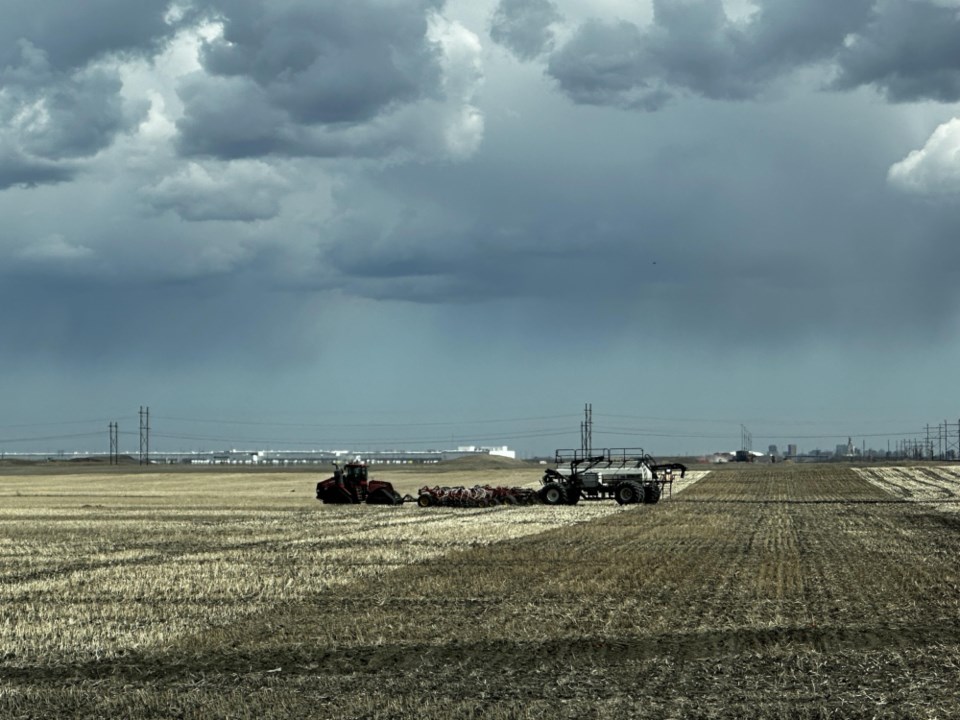
With limited precipitation and runoff water receding over the past week, seeding is ramping up in many areas. Seeding is currently 16 per cent complete, up 13 per cent from last week. This is behind the five-year average of 28 per cent and the 10-year average of 27 per cent.
Most regions made considerable progress this week, especially in the southwest region where seeding is 34 per cent complete. The southeast region is 24 per cent and the west-central region is 13 per cent complete. The east-central region reports eight per cent, the northwest six per cent complete and the northeast is at one per cent complete.
Most seeded acres are pulse crops, such as field peas and lentils, followed by cereals and oilseed crops that are beginning to make progress. Current seeding progress is as follows:
Pulse crops
- 33 per cent for field peas;
- 32 per cent for lentils; and
- 19 per cent for chickpeas.
Cereal crops
- 29 per cent for durum;
- 23 per cent for triticale;
- 14 per cent for spring wheat and barley;
- Five per cent for canary seed; and
- Three per cent for oats.
Oilseed crops
- Nine per cent for mustard;
- Seven per cent for canola and flax; and
- Two per cent for soybeans
Perennial forages
- 10 per cent.
Overall, rainfall was limited throughout the province over the past week. The highest reported rainfall fell in the Francis, Rosthern and Milden areas at eight millimetres (mm) each. The Carrot River area recorded seven mm and the Arborfield area six mm. A few other areas reported trace to limited rainfall.
Topsoil moisture remains mostly adequate. However, dry and windy conditions are reducing the surplus water, resulting in a growing number of areas reporting a shortage.
Cropland topsoil moisture is:
- 13 per cent surplus;
- 70 per cent adequate;
- 16 per cent short; and
- One per cent very short.
Hayland topsoil moisture is:
- Seven per cent surplus;
- 69 per cent adequate;
- 21 per cent short; and
- Three per cent very short.
Pasture topsoil moisture is:
- Five per cent surplus;
- 63 per cent adequate;
- 29 per cent short; and
- Three per cent very short.
Most producers are not concerned with water quality for their livestock at this time. Currently, 75 per cent of producers report no shortage of on-farm surface water supplies for livestock occurring or anticipated, while none indicate severe shortages.
As seeding progresses, drivers are encouraged to watch for farm machinery on highways and roads during this busy season and producers are reminded to take precautions while transporting equipment.
The Farm Stress Line is available to producers, their families and farm employees through the toll-free number, 1-800-667-4442, at any time for confidential, free services from mental health professionals trained in issues facing producers.
A complete, printable version of the Crop Report is available online.
(Government of Saskatchewan News Release)