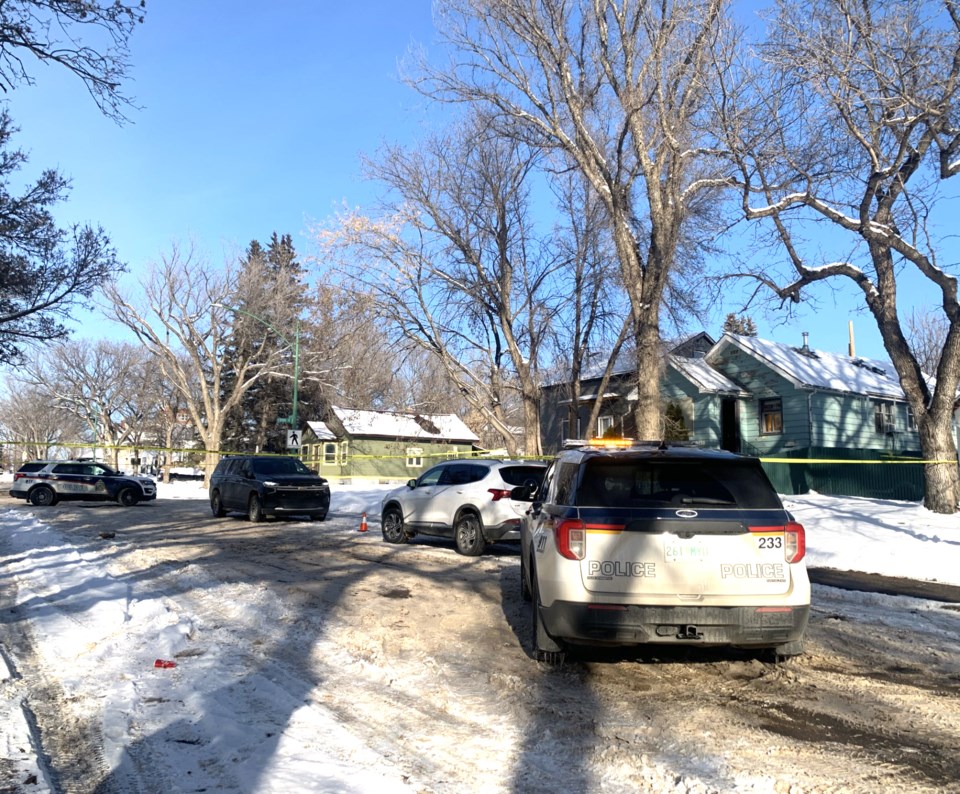
SASKATOON, Sask. — Gang involvement, the chaos inside a "trap house," and a lengthy statement from Katlim Desjarlais-Kelly shaped the sentencing hearing in Saskatoon Court of King’s Bench on Aug. 28, where the accused detailed the fatal shooting of Arden Panipekeesick and the retaliation he said followed.
Desjarlais-Kelly, now 23, was convicted of manslaughter by a jury earlier this year in the Feb. 10, 2024, death of Panipekeesick, 48, who was shot inside a Westmount home at 328 Avenue K North. Court heard the residence contained drugs, guns and gang members that morning.
When Justice Krista L. Zerr asked Desjarlais-Kelly if he had anything to say, he spoke at length. He said he went back to the house out of fear.
“You're probably wondering why I never left that house after I got shot," said Desjarlais-Kelly. "I wasn't raised like everyone else. I was taught that ‘snitches get stitches’ and I was scared. I was more worried about myself than worried about the danger that was in that house.”
Desjarlais-Kelly said he believed the victim had two guns and described returning fire.
“I felt like I was dying. I thought I got shot twice. He had two guns. I believed the victim had two guns. That's what I remember. I just wanted a tie. I didn't want anything else.
“I’m not a bad person," he added. "I know I pulled that trigger. I know the bullet that hit him came from the gun I was holding but that’s not the person you are seeing before you right now. The person who did that was scared, he wasn’t thinking right, he just got shot. He was desperate.”
Desjarlais-Kelly also spoke about gang retaliation. He said he was threatened immediately after being in jail and had been in multiple fights over the killing. He told the court people close to him were harmed, including a pregnant girlfriend who was assaulted and miscarried after someone overheard her talking to him on the phone from jail. He said a man considered a father figure was hospitalized twice because of the conflict.
Desjarlais-Kelly said his view of the victim changed after hearing testimony from Panipekeesick’s wife, Eva Pritchard, who told the court she held her husband as he bled to death. He said listening to her testimony “hit” him and made him think about Panipekeesick as a person with a family.
“That sucked listening to that because I caused that,” said Desjarlais-Kelly. “It was really hard listening to that, how she held him as he took his last breath.”
He said he can’t change what happened.
“I wish [Panipekeesick’s] family was here because I wanted to apologize to them in person but they’re not.
"I never wanted to kill anyone," he added. "I never wanted to take anybody's life. It's not what I wanted. I didn't want to hurt him."
Desjarlais-Kelly said when he was shot, he thought about his own family.
“They’re the only ones that were on my mind, and I could only imagine what [Panipekeesick] was thinking when he was laying there bleeding out.”

High-risk to reoffend: Crown
Crown prosecutor Lee Hnatiuk said Desjarlais-Kelly testified at trial that he was at the house to provide fentanyl to the occupants. He was on a firearms prohibition, knew it, and brought a loaded firearm. He had the opportunity to leave, chose to return, and ultimately that led to Panipekeesick’s death. He said he fired at close range, placing several people at risk.
Hnatiuk told the court Desjarlais-Kelly had 15 prior convictions, most involving violence or weapons, and that he was assessed as high-risk to reoffend violently.
Court heard a psychological assessment diagnosed Desjarlais-Kelly with PTSD, generalized anxiety disorder, ADHD, oppositional defiant disorder, and substance use disorder.
Hnatiuk sought a 10-year sentence for manslaughter and one year consecutive for the firearms offence. On Aug. 28, Desjarlais-Kelly also pleaded guilty to possessing a firearm while prohibited by a court order.
The Crown also seeks a lifetime firearms ban and a no-contact order with Eva Pritchard.
Majority of murders gang-related: Defence
Defence lawyer Patrick McDougall said the victim was a gang member, the house was a "trap house," and Desjarlais-Kelly had been shot in that same house by the victim.
He said the weapons were “spirited” out of the house before police arrived.
“They didn’t find the weapon used by Mr. Desjarlais-Kelly.”
He said Desjarlais-Kelly has severe Gladue factors.
“When you’re brought up in a family where the father is in jail and the mother is using [drugs], the kids fight for their lives.”
McDougall said Desjarlais-Kelly’s grandmother attended residential school, his mother was part of the Sixties Scoop, and his Gladue factors “began at birth.” His childhood was spent around gang-involved relatives.
He said when you live in a culture of gang violence, it’s "shoot first, ask questions later." He pointed out that most murders in Saskatchewan are First Nations against First Nations—Indigenous against Indigenous—adding that every murder trial he has handled in the last 15 years has involved a First Nations victim and perpetrator.
He argued for a seven-year sentence on the manslaughter conviction, plus one year on the weapons charge.
Judge reserves decision
Desjarlais-Kelly has been in custody since Feb. 10, 2024, and will receive credit for 931 days already spent in custody.
Justice Zerr reserved her sentencing decision until Oct. 1.
ljoy@sasktoday.ca