In the latest episode of Trade Dispute: Impact on the Prairies, we examine how new border surtaxes are being collected, track Alberta’s international investment push in Toronto and speak with Grand Forks Mayor Brandon Bochenski about the trade dispute’s fallout in North Dakota.
Podcasts are available now on GX94, Yorkton, or 620 CKRM, Regina, hosted by Steven Wilson. Or read the transcript below:
Steven Wilson — Welcome to Trade Dispute: Impact on the Prairies. I'm Steven Wilson. The trade conflict between Canada and the United States continues to escalate into new territory, moving beyond tariffs toward outright economic isolation.
Analysts over the weekend warned that the Canada-United States-Mexico Agreement is at risk of collapsing entirely. Steven Brown, chief economist at Capital Economics, told the Washington Post that incoming import bans on Canadian goods show the White House is focused on inflicting economic pain rather than raising revenue. A recent Pew Research Center survey underscores the growing chill, showing only 35 per cent of Canadians now describe the United States as a reliable partner, down sharply from 83 per cent four years ago.
Speaking at the Toronto International Film Festival yesterday, Prime Minister Mark Carney addressed reports suggesting Canada is considering associate member status with the European Union. Carney clarified that Canada is not seeking EU membership but is actively pursuing what he called a unique alliance with the European bloc, warning that the world has become more divided and friends must stick together. The White House quickly pushed back against Canada's $27.6-billion retaliatory tariff package that took effect last week, targeting key swing states like Michigan, Ohio and Pennsylvania. White House spokesman Kush Desai defended the administration's stance, arguing those heartland states have suffered from unfair foreign trade practices, and claimed Canada walked away from the best deal offered to any trading partner. As Washington prepares to ban imports of Canadian alcoholic beverages, motorcycles and select dairy products on Sept. 29, Canadian leaders are aggressively looking abroad for new capital. In Toronto, Alberta Premier Danielle Smith is leading a provincial delegation at Canada's first international investment summit.
The province is pitching 34 major energy, agricultural and technology projects to global investors to shield Alberta from cross-border volatility. Jon Tupper has the details from Fort McMurray.
Jon Tupper — With international trade still in the spotlight, Alberta Premier Danielle Smith is heading to Toronto to pitch the province to some of the world's largest investors. Canada's first international investment summit begins today. Smith is bringing a list of 34 proposed Alberta projects.
She's joined by three cabinet ministers, along with representatives from Invest Alberta and AIMCo, the province's investment arm. The province says Team Alberta will meet with more than 100 investors, representing a combined investment pool of more than $50 trillion. Alberta is pitching opportunities in energy, critical minerals, agriculture, artificial intelligence, aerospace, defence and advanced manufacturing.
The projects in the Alberta Dealbook require more than $200 million in capital, but they've already reached the advanced stage. Smith says Alberta wants to compete for investment, create jobs and drive economic growth. The summit comes as Canada continues to deal with its trade dispute with the United States and the economic uncertainty regarding tariffs.
In Fort McMurray, for GX94 News, I'm Jon Tupper.
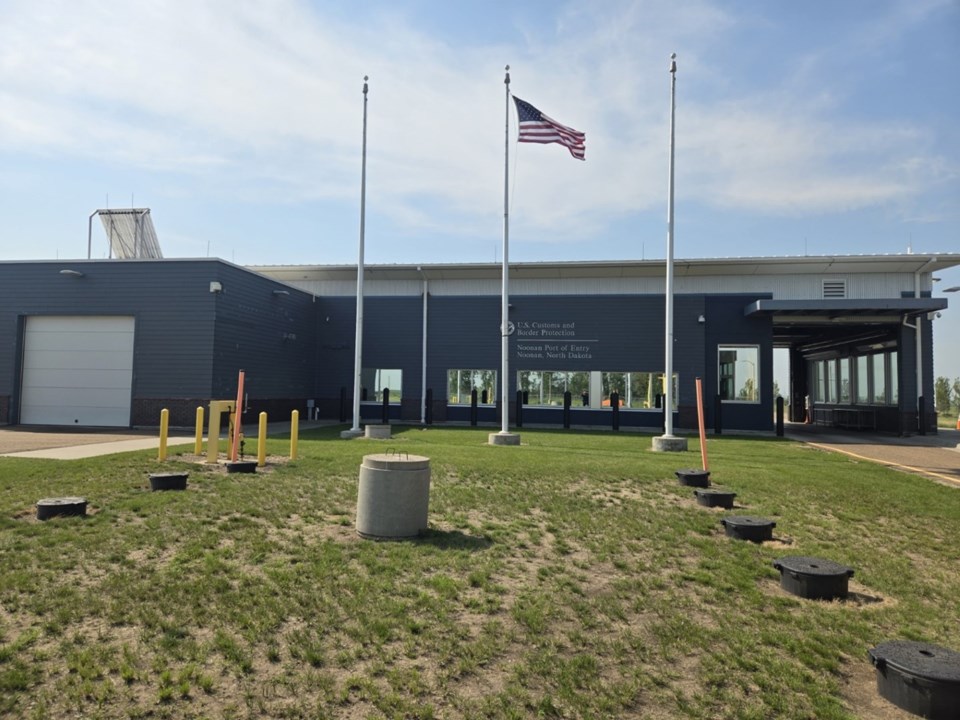
Steven Wilson — While provincial leaders pitch international investors, everyday travellers and commercial importers are navigating a new reality at the border. The Canada Border Services Agency has begun managing new surtaxes on imports from the United States, requiring travellers to declare every purchase, even if it qualifies for regular duty-free limits. Will Mandzuk reports from Regina on how border officials are handling the changes.
Will Mandzuk — People who frequently travel between Canada and the United States have new border rules to follow. To keep up and adapt to the changing landscape between the two nations, the Canada Border Services Agency is managing new surtaxes for all imports. This means when coming across the border, you will need to declare all your goods, even if your items qualify for tax-free exemptions.
The CBSA says these rules apply to everyone. The new surtaxes will apply to business imports, mail or courier packages, visitors who leave their goods behind and returning Canadian residents whose purchases have exceeded their personal duty-free limits. Paying these surtaxes will be done the same way and at the same time as you normally pay regular customs duties and taxes.
The CBSA will also check your paperwork to ensure your product descriptions, country of origin and declared values are accurate. The border agency does not expect delays at the border due to these surtaxes. It does ask both residents and non-residents to have their documents and invoices ready ahead of time.
For GX94 News, I'm Will Mandzuk.
Steven Wilson — While political battle lines are drawn in Ottawa and Washington, the economic strain is felt just as acutely in northern border communities south of the border. Grand Forks Mayor Brandon Bochenski says Canada is North Dakota's largest trading partner, accounting for a very large percentage of the state's exports and imports. Bochenski says local agricultural dealers and retail businesses are worried about the mounting disruption.
Brandon Bochenski — Not just Grand Forks, but probably statewide North Dakota. Eighty per cent of our exports go to Canada and roughly 70 per cent of our imports are coming from Canada. So as far as an economic driver, Canada is our absolute largest trade partner.
So anything that's going to get in the way of just that trade and that friendliness across the border, it's going to make people worried and it's going to hit their pocketbooks as far as doing business.
Steven Wilson — Bochenski points out that retail traffic and cross-border shopping trips from Manitoba have dropped noticeably. He hopes national leaders will dial back the rhetoric and recognize how closely tied communities are along the 49th parallel.
Brandon Bochenski — I hope that everything just takes a kind of a level set and we realize that we've had probably the strongest allyship between our two countries. We share a massive border that's, you know, largely unprotected, not certainly not like the southern border on the coast. So we share so much, so hopefully some of the rhetoric will subside and some common sense will return to the argument because the U.S. and Canada together is much stronger than us fighting. That's for sure.
Steven Wilson — Tomorrow we will continue tracking provincial and national developments as businesses and communities adapt to this evolving trade standoff. I'm Steven Wilson, and thank you for listening to Trade Dispute: Impact on the Prairies. Local news delivered right to your smartphone with the GX94 app and available at SaskToday.ca and GX94Radio.com.