


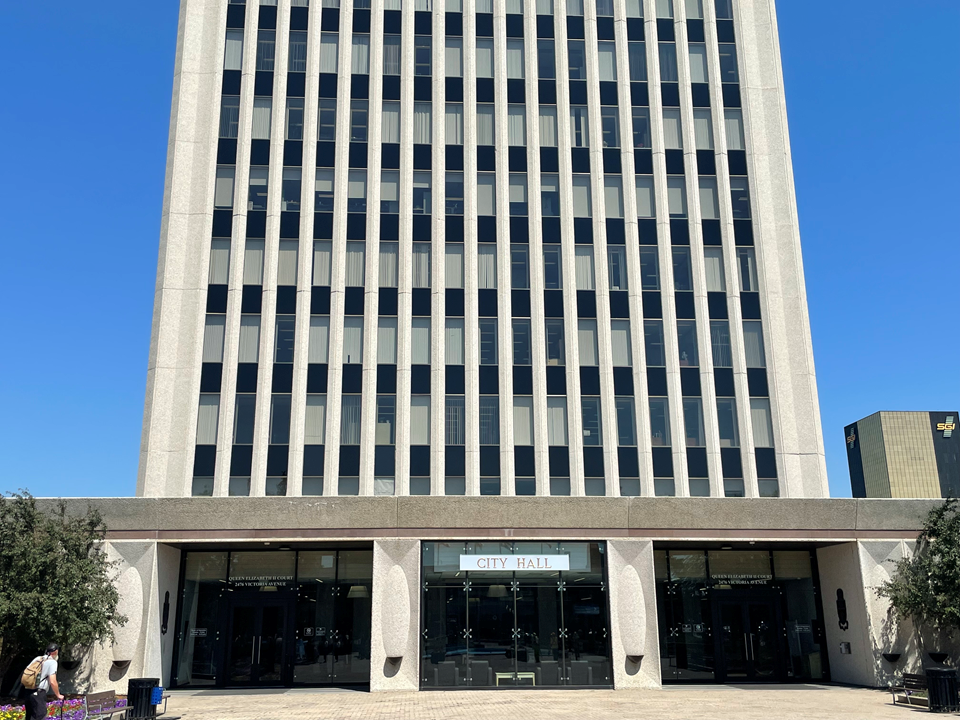
REGINA, Sask. — Regina homeowners with lead service lines could see their replacement costs capped at $5,000 under a proposal unanimously endorsed by the city’s executive committee.
Last year, the City of Regina offered residents an option to remove lead pipes from their privately owned properties and pay the cost over 10 years. The executive committee is now exploring an option to provide additional help by capping the homeowner’s share at $5,000, which could still be paid over 10 years.
Speaking to the committee, Patricia Elliott of the Get the Lead Out community advocacy group said, “The residents who are most vulnerable and most affected are residents with low income who already have a lot of challenges in life.”
Deputy city manager Kurtis Doney said that by capping the payment for lead pipe removal at $5,000, homeowners could pay $500 per year over 10 years, but residents who cannot afford that amount would have fewer other options.
Doney said that, as of now, 252 properties have undergone lead service line removal, surpassing the goal of having 209 removed by Aug. 31, 2026.
“We’ve met the target, but we’re not done. We need to do more replacements as the weather holds into the fall,” Doney said.
While the city has the ability to mandate that private property owners replace their lead pipes, it is offering the $5,000 cap as a form of “strong encouragement.” Doney said the city would prefer not to use a mandate — which could mean shutting off water for non-compliant property owners — as that would be “extreme,” but it remains a possibility in the future.
Carolyn Kalim, director of water, waste and environment with the City of Regina, said the city has been sending letters to landlords suspected of having lead pipes during times when tenants are moving in and out — which can be a good time to remove the pipes — but it has been challenging because “they’ve never taken advantage of our program.”
Doney said the city has sent out 9,679 letters to private property owners who could possibly have lead pipes.
Coun. Dan Rashovich pointed out that people buying new homes should legally be informed if the property has lead service line connections, especially since lead is “so dangerous for people.” Doney and Kalim indicated they will take the matter up with their provincial counterparts, as any decision to enforce such a requirement is outside the city’s jurisdiction.
Doney pointed out that lead connections are primarily found in communities that are older than 1960, such as North Central and Heritage.
Regina’s executive committee unanimously approved the recommendation to cap homeowners’ costs for private-side lead service line replacements at $5,000.