


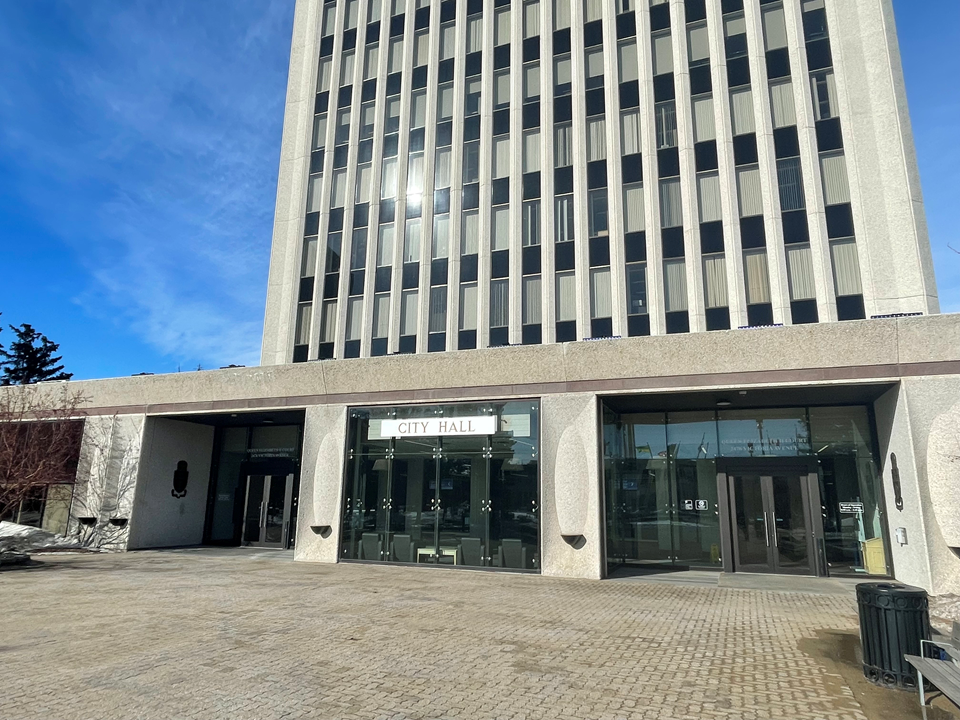
REGINA, Sask. — Regina city council has rejected a proposed change to its planning rules that would have required elected officials to approve certain exceptions to development-planning requirements, leaving residents’ concerns about transparency and the Bell AI data centre unresolved.
Coun. Sarah Turnbull’s motion was defeated 8-3 on Oct. 28. It followed questions about why city administration had waived a concept or secondary plan requirement for the data centre site in the collaborative planning area shared by Regina and the Rural Municipality of Sherwood.
Turnbull argued that allowing officials to waive the requirement without council approval could limit public scrutiny of major developments near the city. She said the proposed change would not replace the work of professional planning staff, but would bring the decision about waiving a plan to elected officials.
“I think it’s very dangerous territory for us to waive away those without any accountability and transparency to our community,” Turnbull said.
The motion was not a vote to approve or reject Bell’s project. Nor would it have transferred authority over the site from the rural municipality to Regina. Those distinctions are central to understanding what council decided and what it did not.
City planning director Autumn Dawson explained that concept plans are generally used to co-ordinate the many elements of a new neighbourhood, including land use, servicing and transportation. In administration’s view, that tool was unnecessary for a single-user development on one site.
“The purpose of it is to co-ordinate land uses, co-ordinate land users, co-ordinate different aspects of a development area, making sure that there’s a puzzle picture on the puzzle box,” Dawson told council. “In this case, there’s no puzzle to put together.”
That explanation addressed the planning rationale, but not the broader public concern about the project’s possible effects. Delegates questioned whether residents had been given enough information about potential environmental impacts, water use, backup power systems and the region’s ability to scrutinize a development of this scale.
James Elliott, a Regina resident who spoke to council, criticized the city’s limited public-facing role.
“This whole process has been behind closed doors in most cases and in fact has been shutting out the public from being engaged in the discussions around this thing,” Elliott said.
He argued the city could have done more to help residents understand the project and participate in discussions, even if Regina did not have final authority over the development.
Dylan Block, another resident who addressed council, said the information available left significant questions unanswered. He described the report from Bell as containing “a lot of uncertainties, a lot of likelys and a lot of pinky promises.” Those comments reflect his assessment, rather than findings established by council.
Maureen Hu, speaking for the Saskatchewan Data Centre Accountability Coalition, said the concern was not opposition to artificial intelligence itself, but the lack of detail about a large project that could affect the wider region.
“They cannot say that this is a marvelous, wonderful, huge, big, fancy new toy for us, but not tell us the details,” Hu said. “They can’t tout it as something that’s so wonderful, but keep the details hidden.”
Administration said Regina’s jurisdiction is limited because the site is outside city boundaries. The RM of Sherwood referred the project to Regina for comments because the original development and part of the proposed expansion are in joint or collaborative planning areas. The city delegated its response to a development officer, but that referral did not give Regina authority over development on rural municipal land.
The city’s direct service relationship with Bell centres on water. Regina and Bell are negotiating an agreement for domestic water and fire-flow supply. Under the arrangement described to council, Bell would pay a 75 per cent utility surcharge, consistent with the city’s approach to developments outside its limits, and Regina expects a one-time development charge of about $6 million.
Administration said Bell would cover the infrastructure costs required to connect to the city’s water system. Regina has declined to provide wastewater services, citing the need to retain capacity for future growth within city boundaries.
Bell has also said it has a conditional agreement to purchase about 895 adjacent acres, potentially allowing additional data-centre buildings in stages, subject to approvals and customer demand. The conditional purchase is not, by itself, approval to build the proposed expansion.
The failed motion leaves the existing planning authority structure unchanged. It also leaves the wider debate unresolved: residents want more public information and opportunities to comment, while the city says its ability to control the project is limited by municipal boundaries and provincial planning rules.