SASKATOON — The Saskatchewan Teachers’ Federation and the Saskatoon Public Schools Board of Education expressed mixed reaction to the provincial government’s 2026-27 budget, with the former criticizing the plan while the latter welcomed it with cautious optimism.
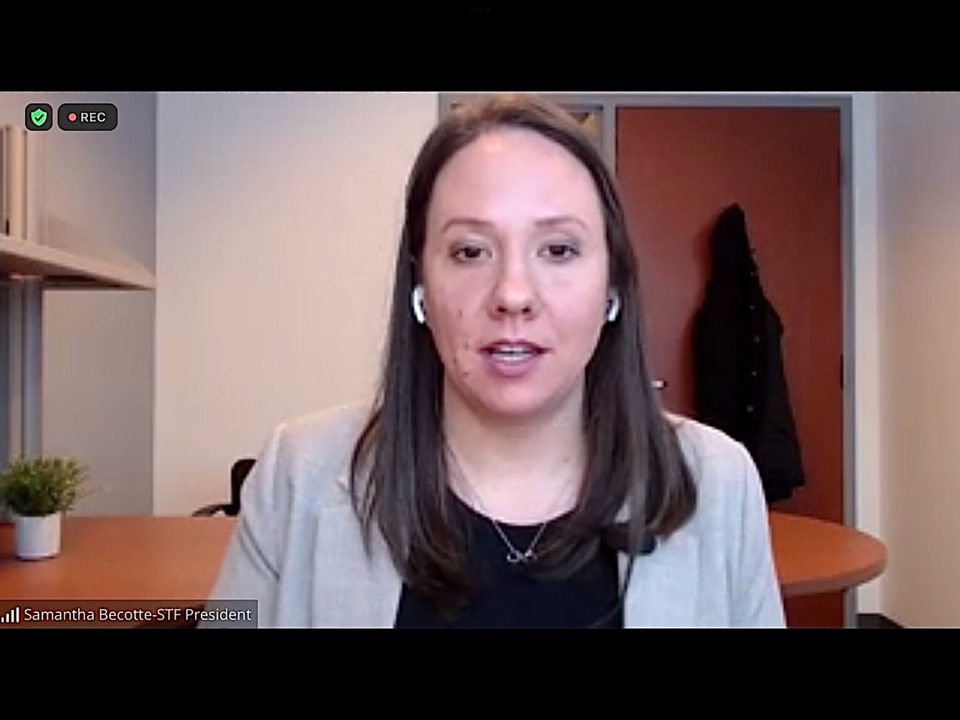
The STF has raised concerns over a funding gap, with president Samantha Becotte saying that the budget falls short of what students and educators need, as it must reflect priorities the government has shown it does not value public education.
The government allocated $2.47 billion in operating funding, a 2.6 per cent increase, or about $62 million. However, Becotte said the money did not take into account enrolment pressures, leaving school divisions with a 1.7 per cent effective increase, below the province’s 2.3 per cent projected inflation rate.
The government’s projected inflation rate of 2.3 per cent creates a funding shortfall, which the STF estimates will result in about a $33 per-student funding decrease, adjusted for inflation, in the next school year.
Despite the minimal increase, the funding does not keep pace with inflation that will impact classrooms, forcing school divisions to make difficult decisions that will directly affect students. While some schools benefit from specialized classrooms, most divisions will face tight budgets.
About $16 million is earmarked for 50 new specialized support classrooms, reducing flexible funding to roughly $46 million, or 1.9 per cent. A further $6 million is set aside for enrolment growth, leaving divisions with about $40 million, or 1.7 per cent, to address all other costs.
The STF said the impacts may include larger class sizes, more split classes or multi-grade classrooms, fewer supports such as educational assistants and counsellors, reduced programming, including Indigenous education and extracurricular activities, and longer wait times for specialized services.
“Many of you may be aware we did have a very strong reaction to the budget, but as the excitement of the day faded, and all of the dust settled were able to get into the numbers, and our concerns continue to remain today,” said Becotte, who represents about 14,000 teachers in the province.
“Ultimately, this means this budget means that challenges related to classroom complexity will continue to intensify next year. It means that there will likely be greater academic challenges likely increase rates of violence that we have been talking about.”
She added that the funding gap could also worsen issues like teacher recruitment and retention, as for the last few years the province has faced challenges in recruiting and retaining qualified and certified professional teachers that every child needs across all school divisions.
“Saskatchewan teachers continue to point to 2015-2016 of what we need here. We know and we hear the premiere say that Saskatchewan is a great place to live, work and raise a family. For anyone raising a family, the best part of a child's youth is to secure and protect a strong public education,” said Becotte.
“This budget really leaves kids out of it. We know that classroom complexity from the 2015-2016 school year to where we are now has only intensified and without restoring the baseline, let alone exceeding it, we know students will continue to be left without the adequate supports in their schools in classrooms.”
The Saskatoon Public Schools board, however, described the budget’s 3.2 per cent increase in operating funding as “a positive step,” pointing to continued student enrolment growth, rising costs and increasingly complex classroom needs.
The division also welcomed targeted investments, including seven new specialized support classrooms in Saskatoon, saying they will help address classroom complexity. However, officials noted they are still reviewing the full details and implications of the funding allocation.
“We will continue to unpack the full details in the days and weeks ahead,” the board said in a statement.
The 2026 budget, adjusted for inflation, reduces per-student funding to $12,311 for the upcoming school year, representing a gap of more than $1,550 per student compared to the 2015-16 level of $13,865 (adjusted for inflation).