SASKATOON — Instead of blowing out candles and sharing cake with his daughter on what would have been her 36th birthday, Brian Gallagher spent April 9 writing his fifth victim impact statement, forced once again to relive Megan’s brutal torture and murder.
On Monday in Saskatoon Court of King’s Bench, Brian stood before Justice J. P. Morrall at the sentencing hearing for 48-year-old Roderick Sutherland and described the endless pain that has consumed his family for more than five-and-a-half years.
“Megan should be here today,” he said. “We would much rather have been celebrating with cake, ice cream and gifts.”
Brian told the court that Megan was a vibrant Métis woman, devoted mother, aspiring Red Seal chef, and someone whose compassion meant she could never say no to someone who needed help. She was 30 years old when she went missing in Saskatoon in September 2020. Four months later, Saskatoon Police Service said they were treating her disappearance as a homicide.
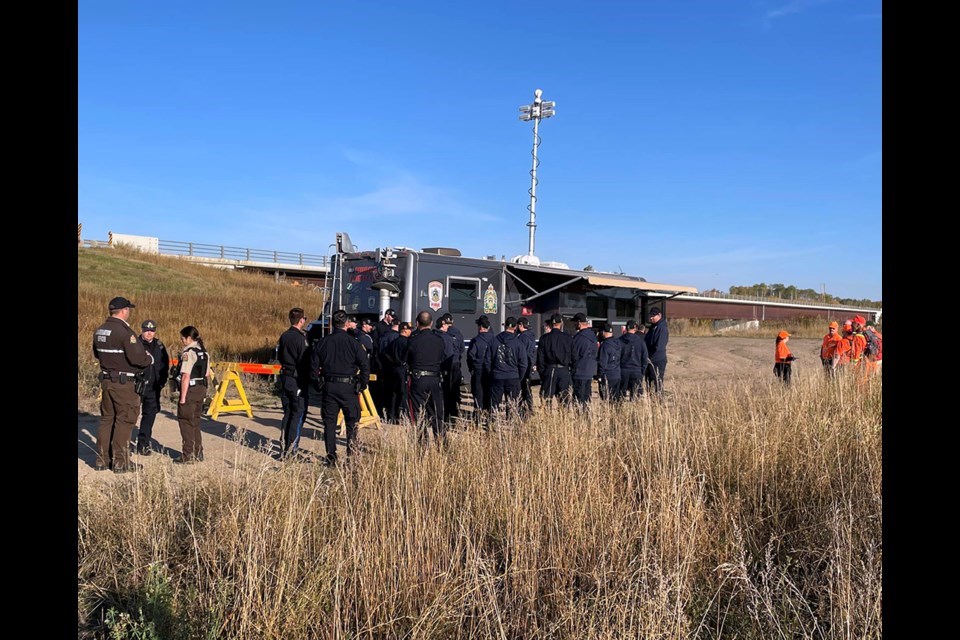
On Sept. 29, 2022, police found human remains along the South Saskatchewan River near St. Louis. The remains were identified as Megan’s.
Megan was last seen alive at the Circle K convenience store at 3730 Diefenbaker Drive in Saskatoon on Sept. 20, 2020.
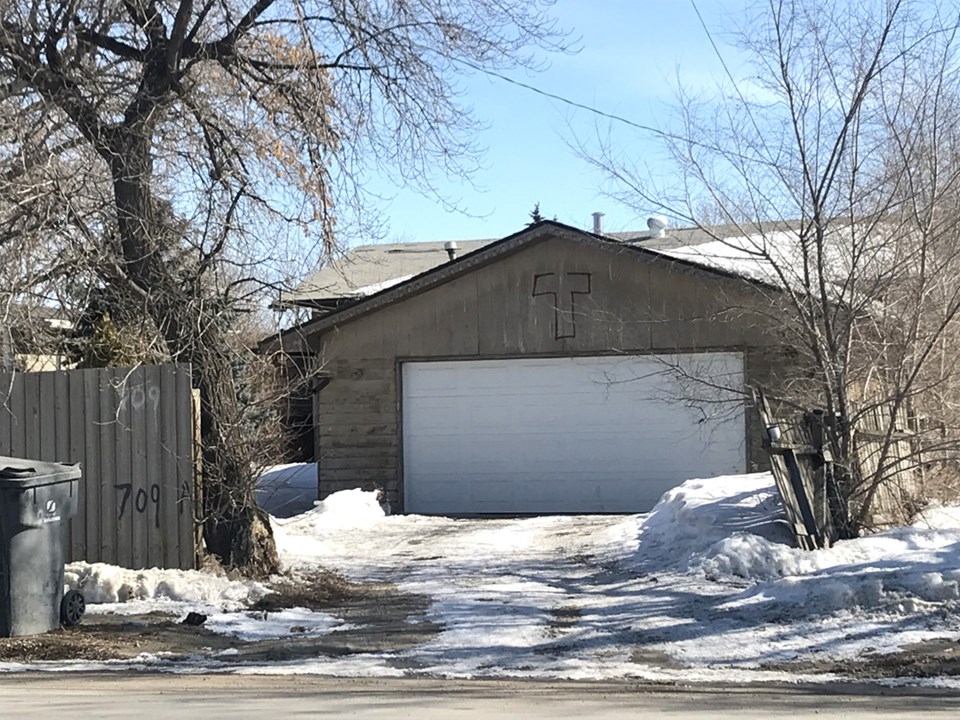
Brian described to the court the horror that unfolded in Sutherland’s garage on Weldon Avenue. Megan was tied to a chair, beaten for about 24 hours with weapons including brass knuckles, suffocated with plastic wrap, and killed as her screams were drowned out by loud music. Her body was left to rot in the garage for days before being wrapped in a tarp, driven to the St. Louis Bridge and dumped into the river, where it lay on a rock for two years.
Brian spoke of the haunting visions that never leave him. He sees his daughter’s swollen, bloodied face, the laughter of the street gang members watching her suffer, the moment her lifeless remains were loaded into a truck.
“She wasn’t yours to take,” he repeated in a poem to Sutherland titled “You Took Her.”
The Gallagher family marked Megan’s birthday by preparing statements that Brian said took them back to “very dark places.”
Twelve victim impact statements were filed with the court, painting Megan not as a victim reduced to her final hours, but as a vibrant woman full of humour, resilience and love.
Sutherland is the last person to be sentenced in the death of Megan. He was convicted of manslaughter and offering an indignity to human remains following a jury trial in October 2025.
Crown seeks 10 -15-year sentence
Prosecutor Jennifer Schmidt urged the court to impose a 10- to 15-year global sentence arguing Sutherland bears high moral responsibility with his conduct placing him in the mid-to-high range of manslaughter.
She also argued the indignity to human remains conviction requires a separate, consecutive sentence.
Schmidt told the court the evidence – particularly Sutherland’s own statement to police – shows he was present “from the beginning until the end” as Gallagher was restrained, assaulted and killed in his garage in Saskatoon. She said the only reasonable inference from the combined evidence is that Sutherland knew what was happening, allowed it to continue, and exercised control over the scene.
“He exercised his own free will to allow people that he associated with to use his building to torture and kill Megan Gallagher,” said Schmidt, arguing Sutherland’s actions were deliberate rather than the result of fear or coercion.
The Crown said the evening started as a “party-type atmosphere,” citing a photo Gallagher sent and a friendly text asking, “Do you guys want anything from Sev” that Schmidt argued contradicts Sutherland’s claim that things were “sinister immediately”
According to the Crown, Sutherland admitted he knew the group wanted to question Gallagher about a previous stabbing involving Bobby Thomas. Schmidt said this knowledge must come before he left the garage, not after, and that he was present when the “mood changed.”
Schmidt said that Sutherland described Gallagher’s “last scream” when Thomas Sutherland arrived.
Post-offence conduct
Schmidt argued Sutherland’s later confession to police in Rosthern wasn’t an act of remorse. She pointed to Sgt. Anthony Boemsch's trial testimony that police had already confronted Sutherland and others at the Weldon Avenue garage, telling them it was the last place Gallagher was seen alive.
“He knew the police were on to him,” said Schmidt, calling the defence’s characterization of the confession a “misnomer.”
She also opposed giving Sutherland any credit for time spent on electronic monitoring, saying there’s no evidence it was a hardship. During that time he was working for relatives, helping with their catering business, and receiving grief counselling while on release.
The Crown argued Sutherland’s actions after Gallagher’s death were “almost as troubling” as the killing itself. Schmidt said Sutherland effectively became “an accessory after the fact to his own offence” by organizing the removal and disposal of Gallagher’s body, using her cell phone, and attempting to distance himself from liability.
She said those decisions hindered the investigation and forced Gallagher’s family to search for two years before her remains were found near the South Saskatchewan River.
Defence seeks 5 years
Defence lawyer Alora Arnold argued for a global sentence of five years, broken down as 3.5 years for manslaughter and 18 months consecutive for indignity to human remains, less remand credit.
Counsel said Sutherland has Gladue issues, including his and his parents’ residential school experiences, his childhood instability, and the long-term trauma and addiction that followed a serious workplace accident.
Arnold said Sutherland has shown rehabilitative potential, pointing out that he has remained sober since October 2022, engaged in counselling, and complied with two years of strict release conditions, including electronic monitoring and a 24-hour curfew.
She said the Crown overstated what Sutherland knew and when he knew it. She said he gave his statement two years after Megan's death.
On the indignity charge, defence argued Sutherland’s role was limited to making initial calls and that there’s no evidence he planned or directed what happened to Gallagher’s remains.

Sutherland addresses the court
Sutherland chose to speak directly to Gallagher’s family at the end of the sentencing hearing.
“This is solely for the family of Megan Gallagher,” he said. “I want to start off by saying sorry. Sorry for your loss. Sorry for not doing more to stop the situation. Sorry for not calling the police.
“I can’t take back what happened,” he added. “But I wish that day never existed. I want you all to know before you leave here today that I’m not a bad person. I have a big heart. I’m remorseful, and one day I pray for forgiveness.”
Justice Morrall reserved his sentencing decision until April 22.