


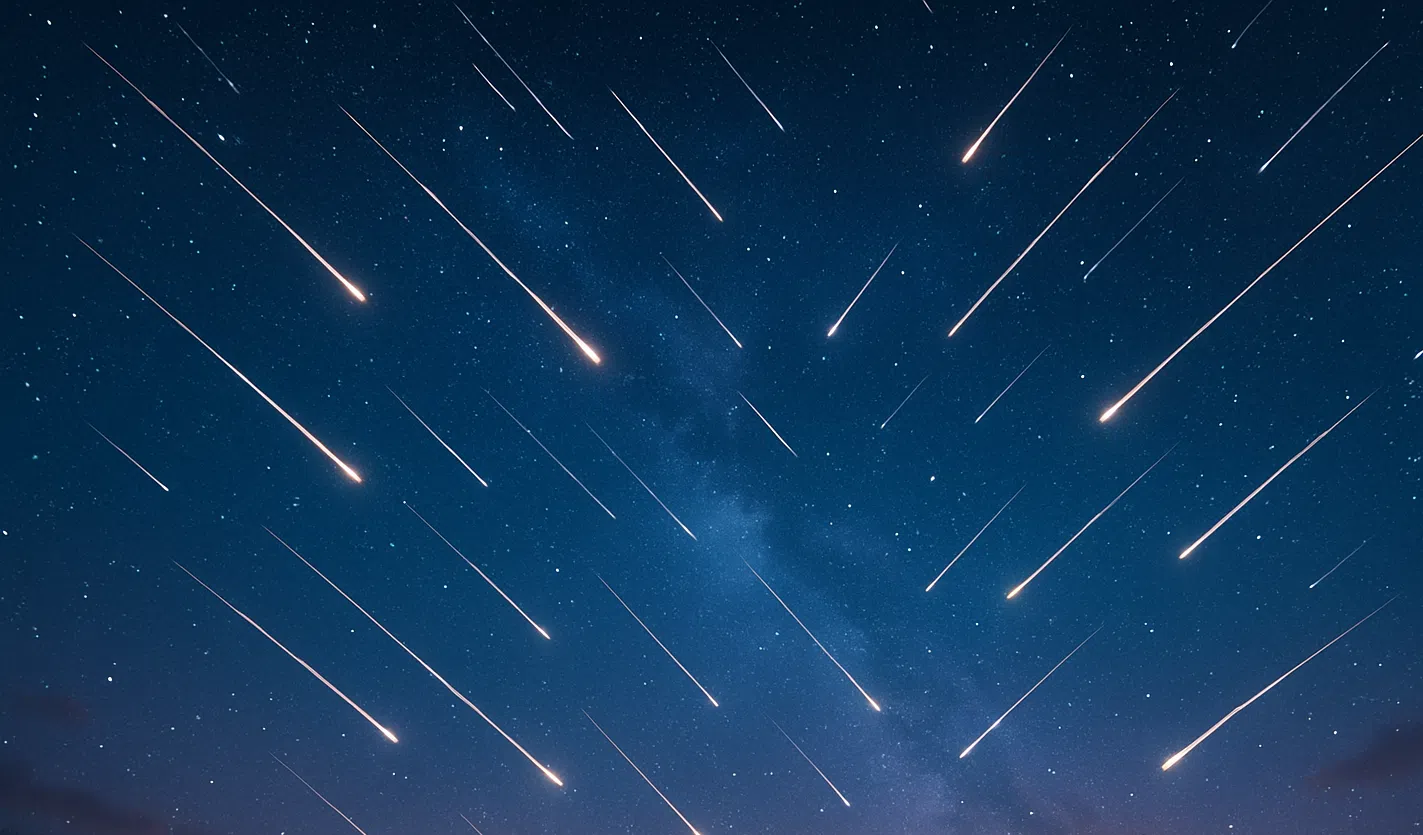
The first major meteor shower of the year will peak this week, however due to partly cloudy weather conditions in Saskatchewan, it may prove challenging to see. The Lyrid meteor shower will be at its best late Wednesday night (April 22nd) and into the early morning hours of Thursday (April 23rd). While this isn’t the brightest meteor shower of the year, scientists believe it is the oldest to wow the people of Earth.
The meteors occur when Earth passes through the debris field left by comet Thatcher, which is currently billions of miles from Earth. Scientists believe the comet is in the outer areas of our galaxy, beyond Pluto, which means it won’t be passing by Earth until at least year 2283. The last time is passed through our galactic neighbourhood, it left a stream of debris like ice, dust, and small rocks. This debris burns up in the atmosphere as the Earth passes by creating a delightful meteor shower.
Experts say up to 20 meteors per hour will be streaking across the night sky this week and some will be fireballs. A fireball is an especially bright meteor, often as bright, or brighter, than the planet Venus. The meteors will be at their best and brightest this week and then gradually end as Earth continues its orbit. The Lyrid meteor shower will end by April 30th.
The next major meteor showers for Canadians to see will be the Perseids (peaking August 12th and 13th), Orionids (peaking October 22nd and 23rd), the Leonids (peaking November 16th and 17th), and the Geminids (peaking in mid-December).




Comments