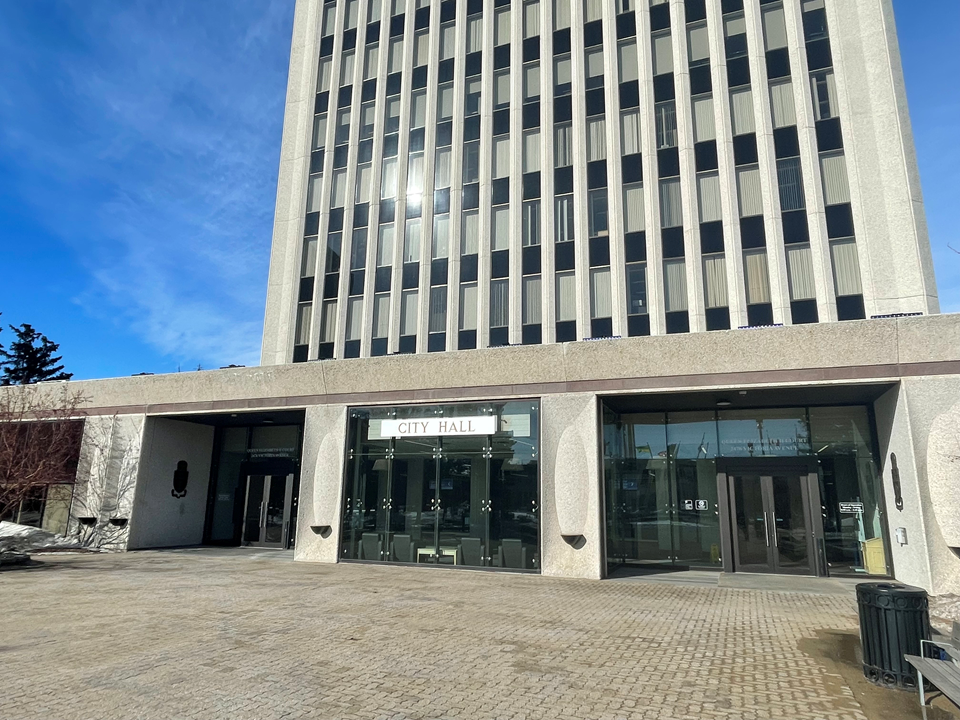
REGINA, Sask. — Barring any new projects or unforeseen needs, the City of Regina will be within two per cent of its current borrowing limit by 2028, according to the audit and finance committee’s annual debt report that is scheduled to be presented to council Wednesday night.
The report, prepared by the city’s financial strategy and sustainability department, states that the city’s capital needs “currently exceed capital funding sources for the foreseeable future” and shows just $15.76 million in available borrowing by 2028 against the current debt ceiling of $890 million.
“This challenge is not unique to the city and will require strong financial management, and prioritization of capital projects and use of debt to ensure that the city stays vibrant,” the report reads, in part.
Over the past 13 years, Regina’s debt limit has increased by more than 150 per cent, from $350 million in 2013 to $890 million, as approved by the Saskatchewan Municipal Board last June.
Financial documents show the city used 60.5 per cent, or $538.32 million, of its current debt limit in 2025, with annual increases projected through 2028 before a slight decrease in borrowing in each of 2029 and 2030.
Those figures include new debt for approved projects including $155 million annually over five years for a new indoor aquatic facility, $60 million annually over four years for a northwest regional lift station and $120 million annually over three years toward wastewater treatment upgrades.
That’s in addition to ongoing obligations for projects that involve — among other priorities — water supply, wastewater treatment, the construction of Mosaic Stadium, the Regina Exhibition Association Ltd. and the Buffalo Pound Water Treatment Corporation.
What the projected debt table does not factor in is what the report estimates is “$1.1 billion in capital projects beyond the five-year capital plan that has not been approved but may require some level of city borrowing when considered.”
The report does note that the city’s credit rating through Standard and Poor’s Global remains at AA-plus with a future outlook of “stable,” with high inflation as a contributing factor hindering further municipal contributions to capital projects.
Without another increase to the city’s existing debt limit, the report notes Regina is projected to have $42.1 million in available borrowing by 2030, representing 4.7 per cent of the current borrowing limit.
The city’s audit and finance committee is set to recommend that council ask the mayor to send a letter of support on behalf of council to the Saskatchewan Municipal Board about options for offsetting challenges regarding the city’s current debt limit, and also “requesting information on how the SMB evaluates the city’s ability to service debt when setting its debt limit.”