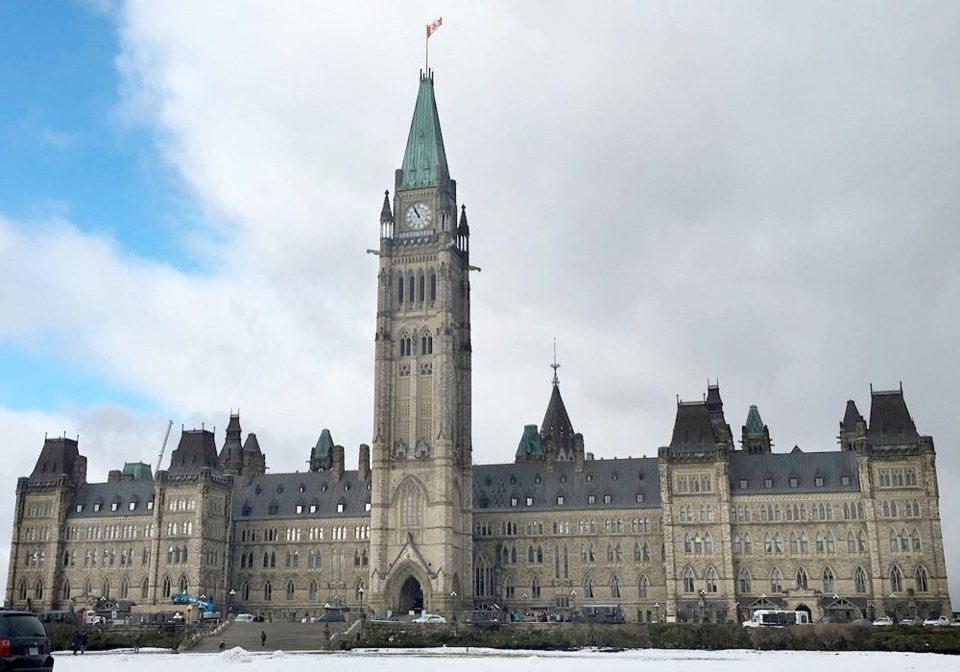
OTTAWA, Ont. — The fall sitting of Parliament kicked off this past week with major new legislation introduced by the federal government affecting major projects.
Bill C-39, the Building Canada Strong Act, was introduced Monday in the House of Commons. According to the government’s statement Monday, the bill is “to bring greater speed, certainty, and predictability to infrastructure project reviews, and support the workers who will build them.”
“This will give business the confidence to invest in Canada, accelerate projects, and drive long-term growth and prosperity that protects the environment and upholds Indigenous rights.”
Among the highlights of the legislation, according to the news release, is the requirement to ensure federal reviews and decisions are completed within one year of a proponent submitting a comprehensive application.
The legislation also proposes to strengthen Canada’s trade corridors and ports, with Canada to formally designate strategic trade corridors, remove bottlenecks and establish a transportation project office to co-ordinate federal permitting and advance priority transportation projects within one year.
Perhaps most controversial, however, are the changes to the Canada Labour Code, which the government says will strengthen collective bargaining by helping parties address issues earlier, reach negotiated agreements and resolve disputes while fully protecting the right to strike.
Reaction divided over Bill C-39
Those latter changes have drawn a hostile reaction from organized labour. The Canadian Labour Congress blasted the bill, claiming in a statement that employer groups are welcoming Bill C-39 because it will feature new powers to end legal strikes. It also disputed the federal Liberal government’s claims that the right to strike will be protected.
“When large corporations are cheering new government powers to shut down legal strikes, workers should be alarmed,” said Bea Bruske, president of the Canadian Labour Congress, in a statement.
“Bill C-39 gives one minister unchecked power to override workers’ constitutional right to strike, with no independent body required to agree and no one with the power to stop them.”
For its part, the Western Business Coalition, made up of business councils from British Columbia, Alberta and Manitoba and the Saskatchewan Chamber of Commerce, welcomed Bill C-39 and its provisions.
The coalition’s delegation, which included Saskatchewan Chamber of Commerce CEO Prabha Ramaswamy, was in Ottawa early this week. At a Tuesday news conference, it welcomed Bill C-39 as addressing items outlined by coalition members in a letter they had sent earlier to all MPs.
Ramaswamy told SaskToday this week that the bill “essentially checks off a couple of the priorities that we had in our letter: advancing major projects and supporting trade resilience.”
Ramaswamy said she particularly supported Bill C-39 streamlining the project review process, saying that “essentially it boils down to one project, one review, one year.” She said that will allow more projects to be approved and more economic activity to take place.
President Trump’s potash comments upstage MPs’ return to Parliament Hill
While Prime Minister Mark Carney’s Liberal government was hoping the focus this week would be on Bill C-39, that was upstaged by a social media post from Donald Trump suggesting a “massive deal” was in the works to buy potash from Belarus.
That post raised alarm bells among politicians throughout Saskatchewan, including members of Parliament.
Trump ended up walking back his potash deal claims within 24 hours, but not before drawing a reaction from Regina Qu’Appelle MP and Opposition House Leader Andrew Scheer on Parliament Hill. He told reporters the post from Trump was “very concerning as a member of Parliament from Saskatchewan."
But Scheer added it speaks to "what Canada can control,” as he called for Prime Minister Carney to “lift the industrial carbon tax which adds cost on Saskatchewan potash producers, which makes fertilizer more expensive for Canadian farmers.”
Scheer roasts Carney over EU ‘associate member’ offer
Scheer also lambasted Carney over his trip the previous week to the European Union, where European Commission President Ursula von der Leyen publicly proposed that Canada become its first associate member. The status itself is not currently a defined category of EU membership, and the details of any new Canada-EU arrangement have yet to be determined.
Speaking to reporters in Ottawa, Scheer said the prime minister had explaining to do, accusing him of having told “a complete falsehood.”
“He said that there were no plans for an Associate Membership with the EU, and then just a few days later said the exact opposite,” said Scheer.
Scheer also said it was “unacceptable” that Carney “briefed and spoke to German members of Parliament, Bulgarian members of Parliament, before speaking to Canadian members of Parliament representing the Canadian people.”
Scheer pointed to “all kinds of costs” that come with membership in the EU, from “higher regulations to higher taxes, border controls that member states don’t have complete sovereignty over. Mark Carney has answered precisely none of these questions, so we’re very concerned about those types of policies.”
Speaking to SaskToday earlier this week, Saskatchewan NDP Leader Carla Beck was asked about the prospect of Canada becoming an associate member of the EU.
Beck said details about what it means aren’t entirely clear, but she believes it was part of the plan all along to diversify trade markets and build relationships with other countries.
“The more that we have options with other countries like or with the EU, I think it just gives us more options and more leverage,” Beck said of the EU associate member speculation.
Beck said she hoped that “there's a time when things go back to more normal with our neighbours to the south,” but said that with the Trump administration “willing to threaten you and your sovereignty and your economy, I think it would be foolish not to make sure that you've got relationships in other places as well around the world, and I see this latest announcement with the European Union as being part of that.”
Changes to airport operating model a concern this week
Another issue that got the attention of Saskatchewan Conservative MPs this week was the plan by the Carney government, announced the previous week at the Canada Investment Summit, to open up the four biggest airports in the country to private investment and a for-profit operating model.
That drew a response from Regina-Wascana MP Michael Kram, who raised concerns that this could mean higher costs for air travellers.
“The new owners are not going to be operating these airports out of the generosity of their hearts,” Kram said in speaking to SaskToday this week.
“They will expect a return on their investments. And so far the federal government has been tight-lipped about what costs will be passed on to air travellers and how much more air travellers will have to pay. So I would certainly like to see that transparency before any of this moves forward.”