


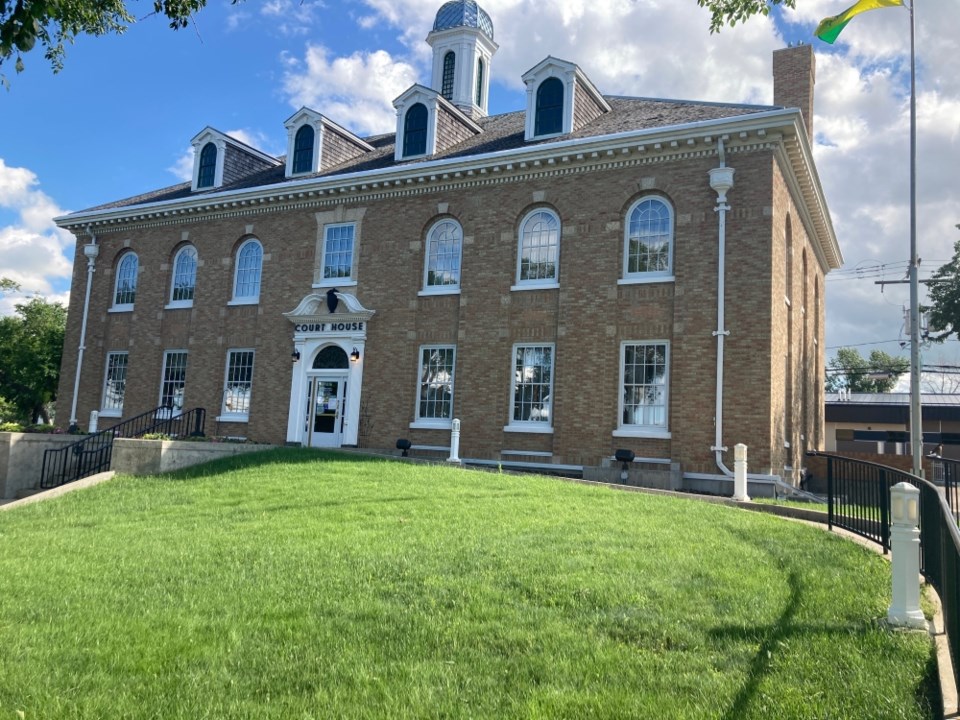
ESTEVAN, Sask. — Jurors have started their verdict deliberations in the Taylor Morgan Japp murder trial in Estevan.
Justice Michael Morris gave the jurors their instructions Oct. 5 in Estevan Court of King's Bench. He recapped the evidence that was presented by the Crown prosecutors and Japp's defence attorneys since the trial started Sept. 2 and gave a summary of the arguments both sides presented.
He also gave jurors instructions on how to reach a verdict.
Japp is accused of second-degree murder in the death of Briana Hayes on April 24, 2024, at White Bear First Nations. Both were residents of Oxbow at the time.
"When deciding whether Mr. Japp is guilty or not guilty, you should not simply weigh the theory or position of the Crown against the theory or position of the defence, since it is always the duty of the Crown to prove the guilt of the accused beyond a reasonable doubt," said Morris.
When in the jury room, their duty is to consult with each other and deliberate with a view to reaching a just verdict, he said, which must be based on facts from all the evidence introduced during the trial.
Anything entered as an exhibit during the trial will be sent to the jury room for deliberations, he said.
"When you begin your deliberations, you should not start out by emphatically expressing your opinion or by declaring your intention to stand for a particular verdict, no matter what others may do or say."
To proceed like that makes it very hard to take into account the "views and wisdom" of your fellow jurors, he said.
"Keep an open mind but not an empty head. Do not just talk but listen too. Put forward your own views in a reasonable way."
During deliberations, jurors cannot communicate with or provide information to anyone by any means about the case, he said, nor can they use any electronic device or media to conduct research about the case until they reach a verdict. The case can only be discussed in the jury room with fellow jurors during deliberations.
If a juror becomes aware of such a violation, they should reach out to a deputy sheriff.
The jury can take a vote at any time, he said, but if they take a reasonable amount of time to consider the evidence and the law and listen to each other's arguments, Morris believes they will likely feel more confident and satisfied with their eventual decision than if they rush things.
He pointed out three potential verdicts exist: not guilty; not guilty of second-degree murder but guilty of manslaughter; and guilty of second-degree murder. A "decision tree" was included in the jury package.
Since it is a criminal trial, the jury must be unanimous in its verdict, the judge said. If jurors aren't unanimous, they cannot acquit or convict him.
"You could all be satisfied of Taylor Japp's guilt beyond a reasonable doubt, even though individually you have different views of the evidence. Similarly, you could all have a reasonable doubt about Taylor Japp's guilt, but not agree why," he said.
Jurors should make every reasonable effort to reach a verdict. Morris encouraged them to consult with each other, express their views, listen to the opinions of others and discuss the case with each other. Another jury will not be in a better position to discuss the case, he said.
If they can't reach a unanimous verdict, they should notify the deputy sheriff in writing without disclosing the results of any vote. The deputy would bring a message, and it would be discussed with the lawyers to determine the next step.
If Japp is found guilty, Morris would decide the sentence, he told the jury.
SaskToday will have updates as they become available.