REGINA — A new food and yard waste facility will soon be built east of Regina.
On Monday, the City of Regina announced an eight-year partnership, including two options, with Awasis Organic Ltd. to build the new facility on Cowessess First Nation land, located 3 kilometres outside the city.
Carolyn Kalim, City of Regina director of water, waste and environment, said the responsibility of constructing and maintaining the facility will fall on Awasis Organic Ltd.
Meanwhile, the City of Regina will pay a tonnage fee for bringing organic and yard waste from its green cart program.
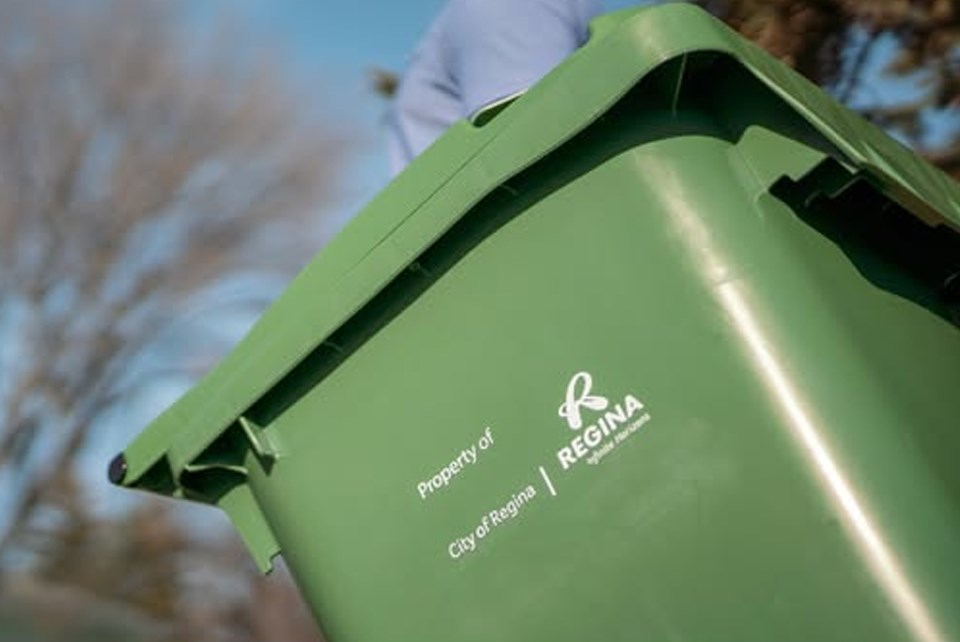
The program started in 2023, with the city distributing green bins for residents to pick up food waste bi-weekly.
With the city collecting more yard waste, a plan had been in the works to build a permanent facility in the RM of Edenwold. This was scrapped after Regina ended its contract with EverGen Infrastructure Corp. in January 2025.
The new facility will allow 65 per cent of the city’s food and yard waste to be diverted from its current drop-off located at the city’s landfill, helping reduce greenhouse gas emissions (GHG).
“The city's landfill is the city's largest emitter of methane gas, which is a powerful climate change gas much stronger than carbon dioxide, and so this is a really big move to have that out of a landfill,” said Kalim.
“By diverting Regina's residential food, yard waste from landfills, the Awasis facility will prevent an estimated 17,000 tons of CO2 equivalent emissions annually,” noted Rebecca Âcikahtê, business development manager of sustainability for Cowessess Ventures Ltd.
Although the facility plans to take 65 per cent of the city’s food and yard waste, Alistair Haughton, director of Awasis Organic Ltd., said the facility has the capacity to take on 100 per cent of food and waste diversion from Regina.
“We also do have the capacity within [the] plant to take additional materials, and that can be other organic waste streams,” added Haughton.
As for the plans function, Haughton explained the waste will be deposited into grade-hoppers.
“Those hoppers are specifically designed to dewater the food waste because it has a lot of moisture in it. It then rises up into the plant itself. It goes to a dryer[ and] we reduce the moisture content, and [then] it goes into the pyallus system.”
The food is moved through the tube while it’s heated from the outside.
“Once it starts to get to a charring process. It would be released as a negative greenhouse gas and through a thermochemical process, which happens naturally, we lock that gas component into the charcoal, and it will not be released for hundreds if not thousands of years," said Haughton.
After the process is completed, Haughton noted that the food waste can be used and sold as a soil amendment.
In total, Âcikahtê believes the project will cost $6 million. She also said Cowessess Ventures Ltd. expects to generate roughly $900,000 in revenue yearly, plus a 5 per cent royalty from the City of Regina and revenue gain from soil sales.
Haughton said Awasis Organic Ltd. hopes to get shovels in the ground in the spring.
The roughly 20,000 square-foot facility is set to open in fall 2026.